A commercial snow removal contract in Northwest Indiana should spell out four things before you sign: the trigger depth that starts a plow, what's included (plowing, hand-shoveling walks, and salt — or just plowing), the response time you can count on during a storm, and proof of insurance. The pricing model — seasonal, per-event, or per-push — matters less than whether the contract actually keeps your lot safe and open.
For a business, winter isn't an inconvenience — it's a liability season. An iced-over lot or a slick entrance is a customer who slips, a claim against the property, and doors that can't open on time. The contract you sign in the fall is what determines whether that risk is handled or hanging over you all winter. Here's what to look for before you commit, with the lake-effect reality of The Region in mind.
The pricing models, and how to think about them
There's no single "right" structure — the best one depends on your risk tolerance and budget predictability:
- Seasonal (flat-rate). You pay one set price for the whole winter regardless of how much it snows. Budget is completely predictable; you're essentially buying insurance against a brutal winter. Best for businesses that want one number and no surprises.
- Per-event (per-push). You pay each time the crew services the property during a storm. You pay for exactly what falls — cheaper in a mild winter, more in a heavy one. Best if you can absorb a variable bill.
- Per-inch / tiered. A variation where the charge scales with accumulation. Fair, but read how the tiers are defined.
Whatever the model, the real question is what triggers service and what's included — that's where contracts quietly differ.
What a real commercial contract covers
Ask every bidder to put these in writing:
- Trigger depth. At what accumulation does a plow automatically happen — one inch, two? A clear trigger means you're not calling to beg for service mid-storm.
- Scope. Does it include hand-shoveling walks, entrances, and handicap spaces, and salt/ice control — or just plowing the lot? Walks and ice are where most slip-and-fall liability actually lives, so "plowing only" can leave your biggest risk uncovered.
- Response time. How fast after the trigger, and how often during a long storm? Repeat passes through a multi-day lake-effect event are the difference between open and buried.
- Priority. Are entrances and handicap spaces cleared first? On a commercial lot they have to be.
- Salt included or extra? Ice control is often the most important part on our melt-and-refreeze winters — know whether it's in the price.
- Insurance. The contractor should carry liability insurance and show proof. This is non-negotiable on commercial property.
A cheap contract that only plows the lot once per storm isn't cheaper — it's a gap in your liability coverage.
Why Region winters make this serious
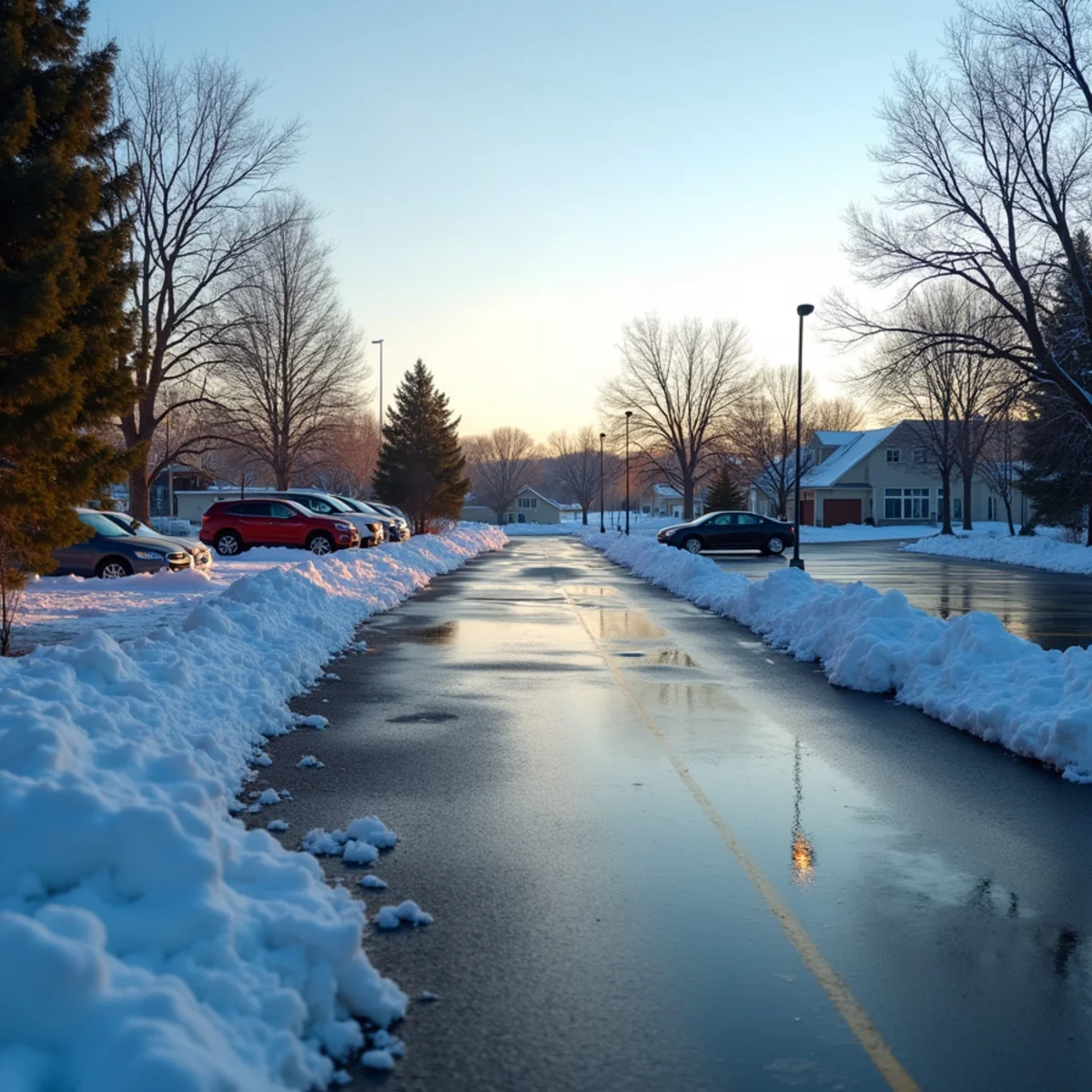
Lake-effect squalls off Lake Michigan dump fast and heavy, and temperatures swing back and forth across the freezing line so the melt-and-refreeze cycle glazes everything with ice overnight. A lot that was clear at 5 p.m. can be a sheet of ice by the time staff arrive the next morning. That's why a commercial plan here has to include ice control and storm-long response, not just a single plow pass. We cover the details of timing and booking in our guide on when to hire snow removal — the short version is that reliable crews fill their commercial routes in fall.
Reliability is the thing you're actually buying
Every contractor's lot looks the same on paper. What separates them is whether the crew shows up at 4 a.m. on a holiday when the forecast turns ugly. A contract is only as good as the company behind it. Our commercial landscaping and property maintenance clients stay with us because we stage before the storm, prioritize their entrances, and respond through the event — the same crew, every storm, with the property left safe and open. Over 8+ years of Region winters, that dependability is what the contract is really for.
Ready to lock in winter coverage?
Don't head into a Region winter without a contract that actually keeps your property safe and open. Rome's crew handles commercial snow and ice across Hobart, Merrillville, and Northwest Indiana as part of full commercial property maintenance. Reach out through our contact page for a free commercial snow estimate before the first squall.
Frequently asked questions
Is a seasonal or per-event snow contract better for a business?
It depends on your budget and risk tolerance. A seasonal flat rate gives you one predictable price and protects you against a brutal winter — you're buying certainty. Per-event costs less in a mild winter but varies with the weather. Neither is "better"; the bigger decision is making sure the contract includes walks, salt, response times, and insurance.
What should a commercial snow removal contract include?
At minimum: a clear trigger depth, the full scope (plowing plus hand-shoveling of walks and entrances and salt/ice control), guaranteed response times with repeat passes for long storms, priority clearing of entrances and handicap spaces, and proof of liability insurance. "Plowing only" contracts leave your highest slip-and-fall risk — the walks and ice — uncovered.
Why is ice control so important for commercial lots here?
Because Northwest Indiana winters swing across the freezing line and the melt-and-refreeze cycle glazes cleared pavement with ice overnight. Plowing removes snow, but salt is what keeps the lot and walkways safe for customers and staff — and safe, defensible surfaces are the point of a commercial plan.
When should we sign a commercial snow contract?
In fall, before the first storm. Reliable crews build and fill their commercial routes early, and signing ahead lets the crew map your lot — snow-pile locations, priority areas, delicate edges — in daylight rather than a whiteout. Waiting until snow is forecast often means the best crews are already committed.
Need help with snow removal?
The crew behind this guide handles snow removal & ice control across Hobart and Northwest Indiana. Get a free, no-pressure on-site estimate.