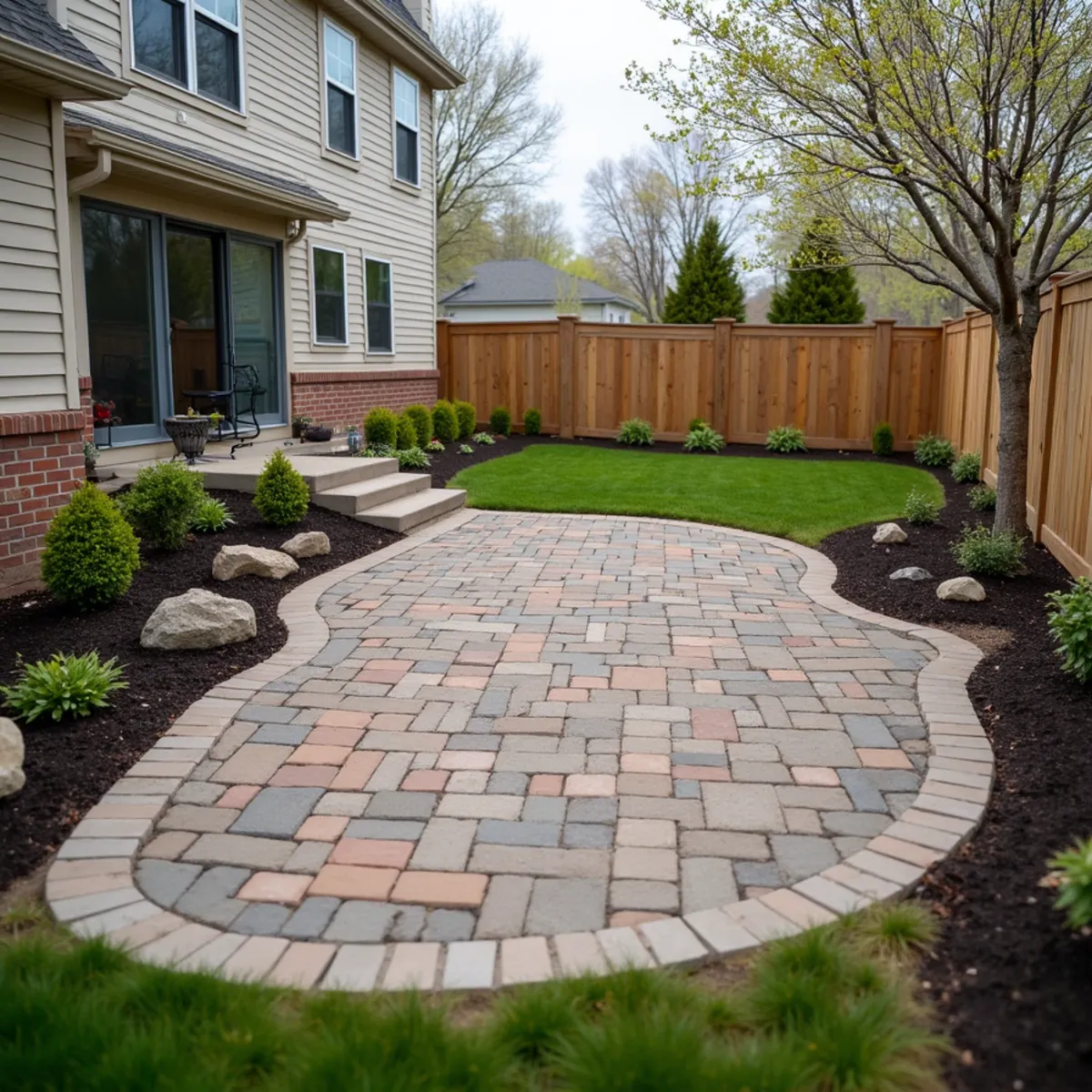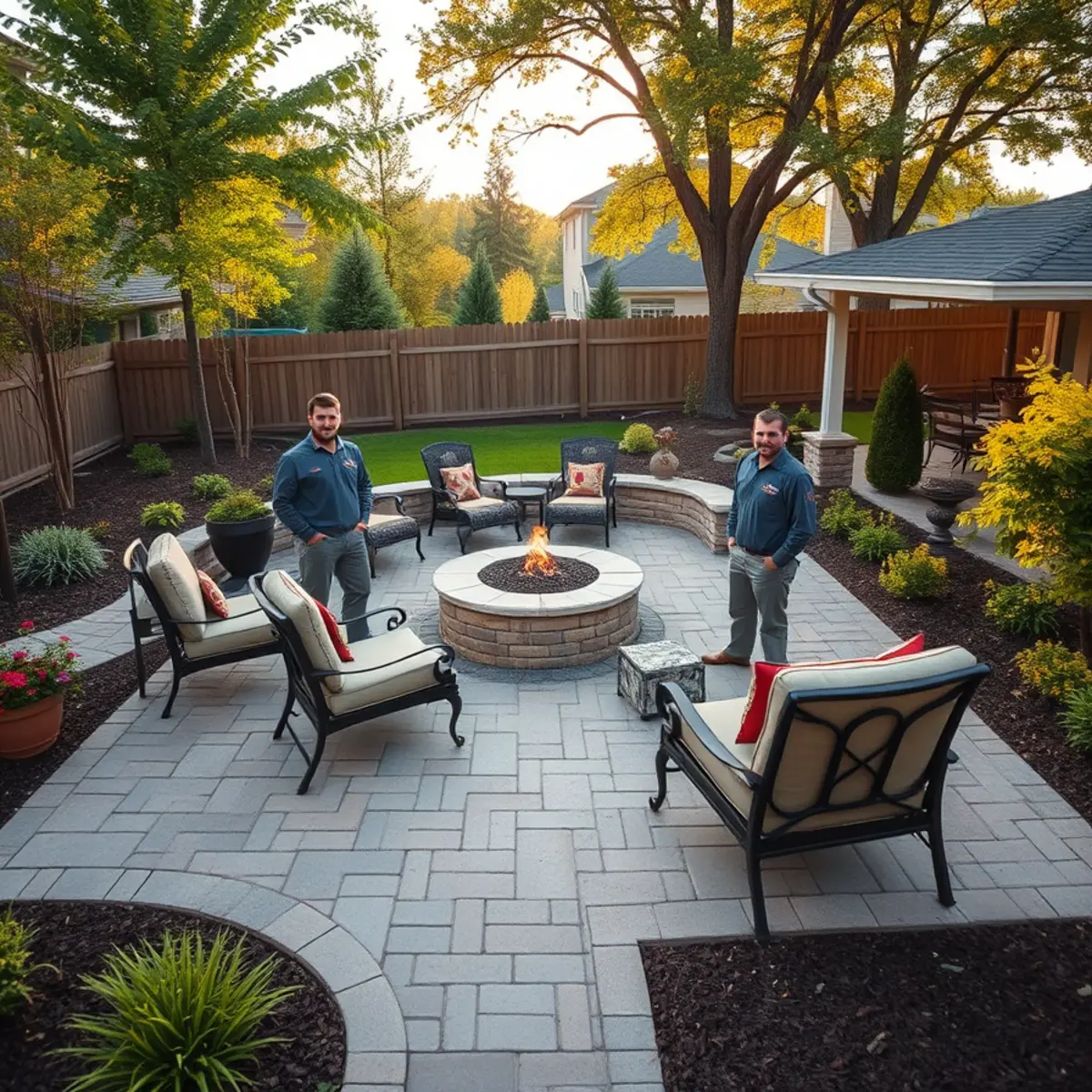
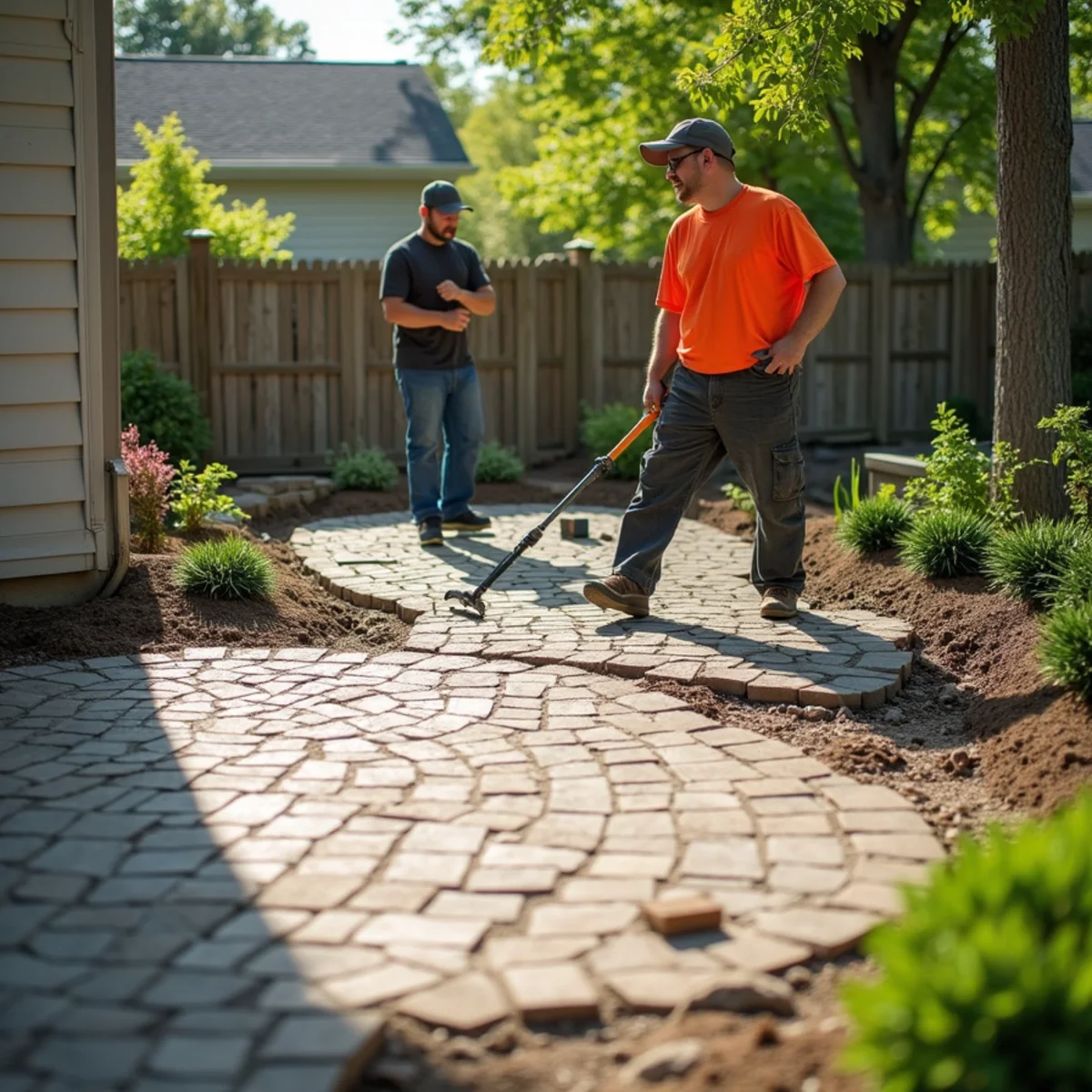
Paver patio repair in Hobart, IN almost always comes down to what's underneath. When a patio sinks in one corner, heaves after winter, or starts spreading at the edges, the pavers themselves are usually fine — it's the base, the drainage, or the edge restraint that gave out. Romes Property Maintenance finds the real cause, rebuilds what failed, and relays your patio level, often reusing the pavers you already paid for.
A patio that's gone wavy is more than an eyesore. Raised edges catch toes, low spots hold water against the house, and every freeze-thaw winter makes the damage a little worse. The good news is that most failing paver patios are fixable without starting over. Patio repair is some of the most common work we're called for across Northwest Indiana, and it's usually a fix for a patio someone else built on a base that was never deep enough for our clay.
What we repair
- Sunken sections — a corner or low spot that has settled and now holds water.
- Heaved pavers — sections pushed up by frost or tree roots that rock underfoot.
- Spreading edges — pavers creeping outward because the edge restraint failed, opening up wide joints.
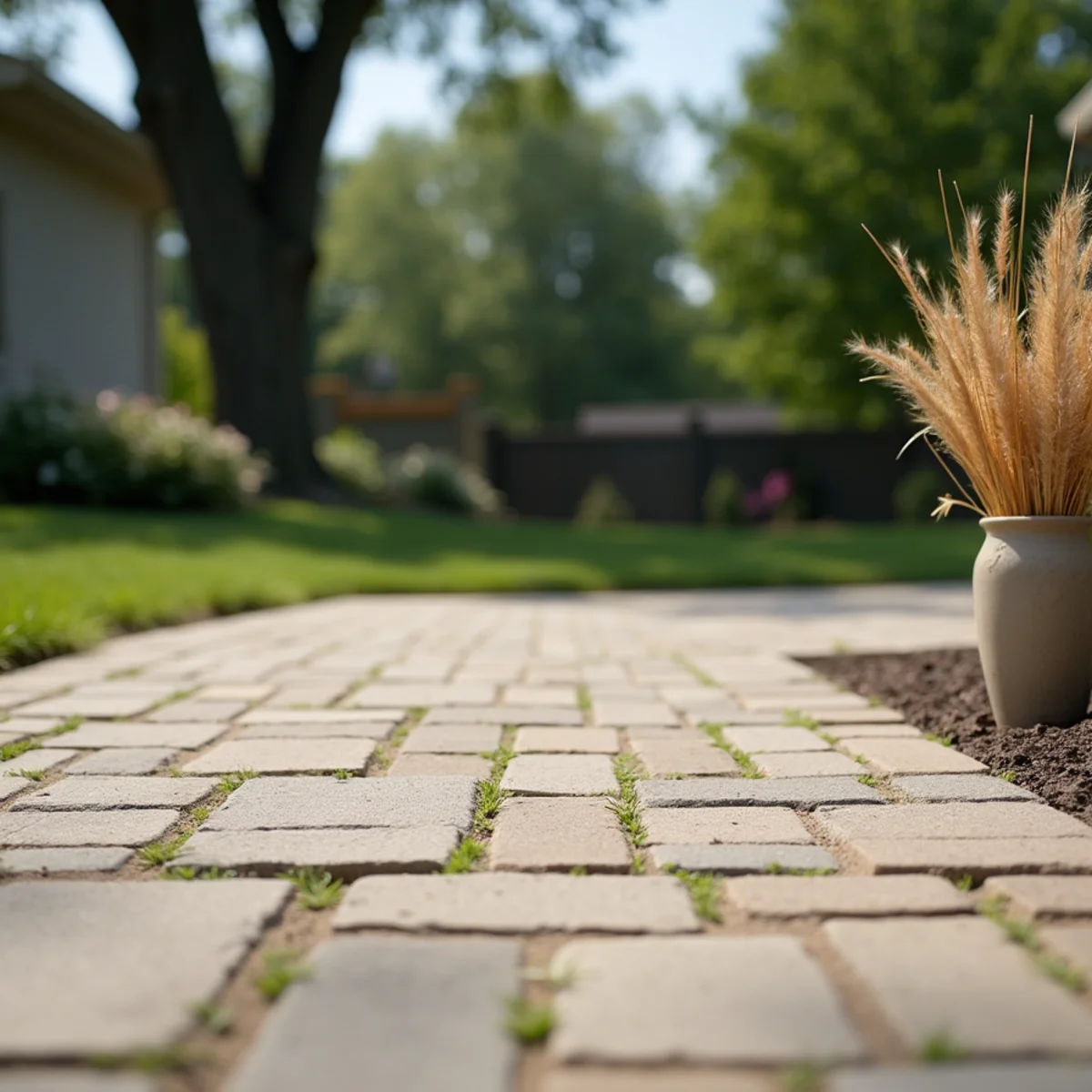
- Washed-out joints — sand gone from the joints, letting pavers shift and weeds take hold.
- Uneven steps and walkways — paver steps and walks that tilt or trip.
- Patios damaged by drainage — areas undermined by downspouts or runoff that has nowhere to go.
We also rebuild failing paver fire pits and seating walls when they've shifted along with the patio around them.
Why patios fail on Region clay
Northwest Indiana runs through dozens of freeze-thaw cycles every winter. Water soaks into the ground, freezes, expands, and lifts everything above it, then thaws and drops it back down. On our dense Lake County clay that cycle is brutal on any patio built on a thin base. The usual culprits, in order:
- A base that was too shallow or never compacted. The most common cause by far. Without enough compacted aggregate under the pavers, frost moves them every winter.
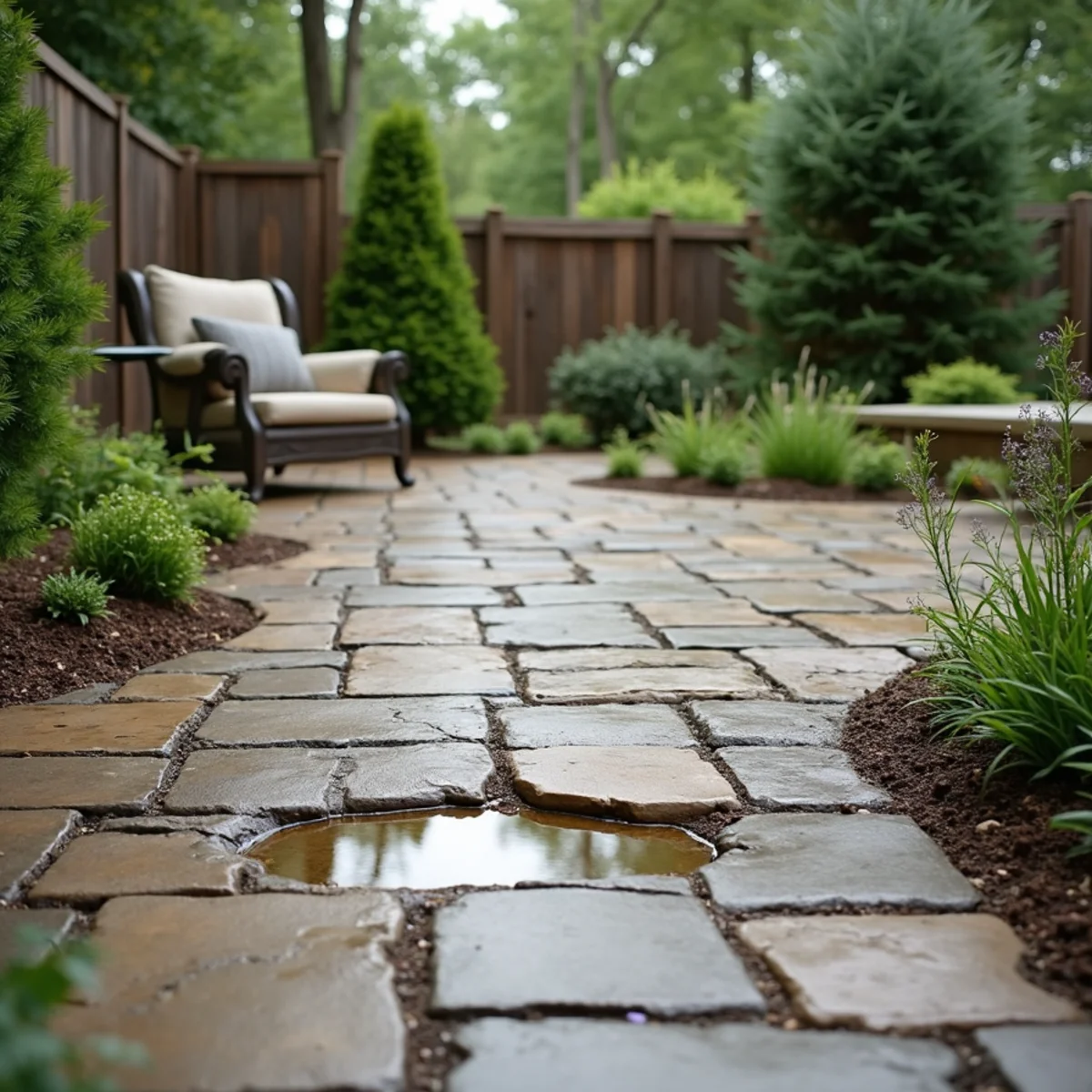
- Water with nowhere to go. A patio that holds water — or sits where a downspout or slope dumps it — saturates its own base and heaves or washes out.
- No real edge restraint. Without a solid edge holding the field tight, the whole patio slowly spreads.
- Settling fill. Patios built over backfill near a foundation or an old pool settle unevenly as the loose soil compacts.
Our guide to why paver patios sink or heave goes deeper on each cause and what you can safely check yourself.
Repair or rebuild? An honest answer
We'll tell you straight which one your patio needs:
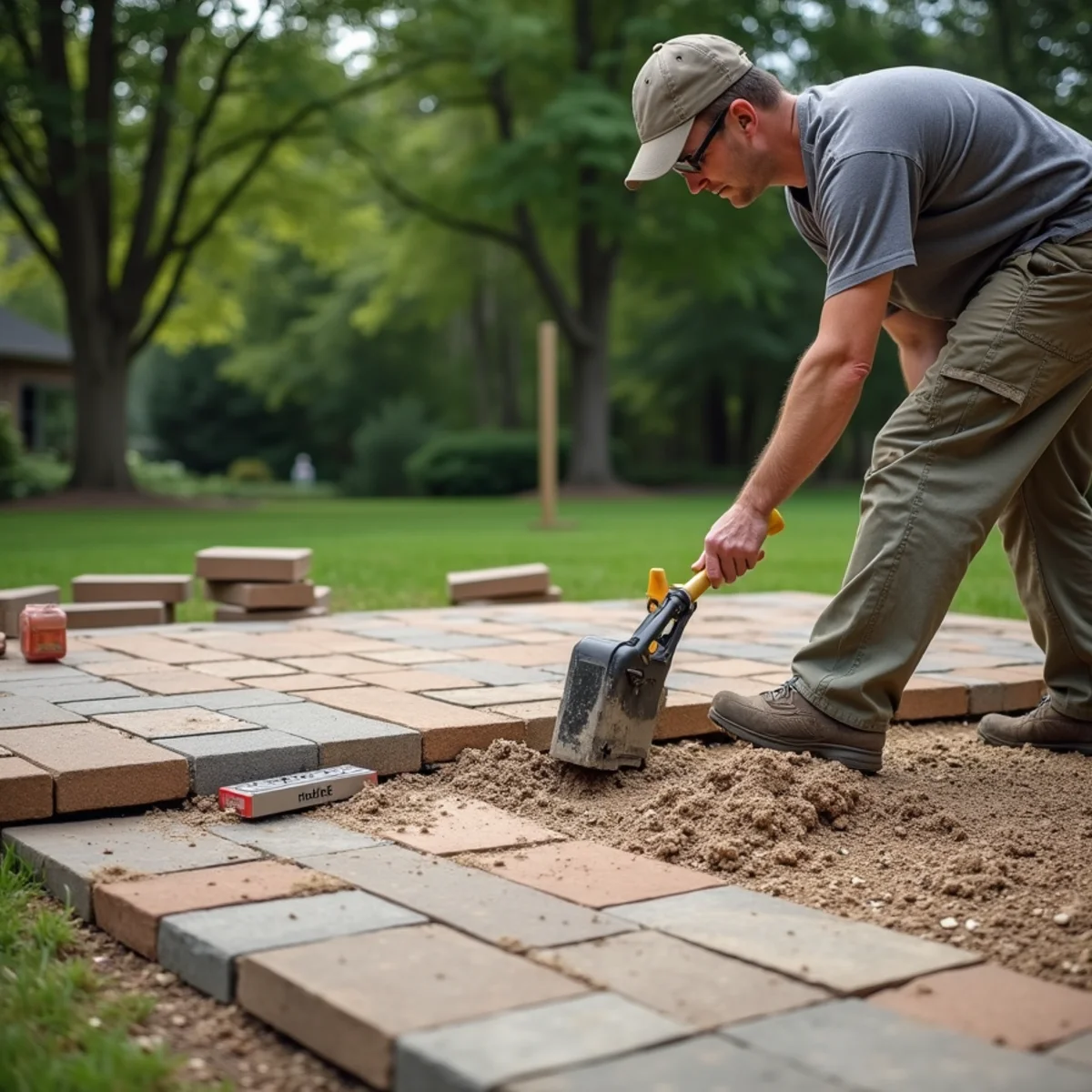
- Reset — the base is sound and only a small area settled. We lift the affected pavers, correct the bedding, and relay them level.
- Partial rebuild — one section's base failed. We lift that area, dig out the bad base, rebuild it with compacted aggregate, and relay the original pavers.
- Full rebuild — the whole patio sits on a shallow or undrained base. Resetting the surface over a bad foundation only buys a season, so we rebuild the base under the entire patio, usually reusing the pavers.
Reusing your existing pavers is often possible, and it keeps the cost well below a brand-new patio. If the underlying problem is water, we fix the drainage and grading as part of the repair so it doesn't come back.
What's included in a patio repair
- On-site diagnosis — we find what's actually moving and why, not just where it's uneven.
- Lifting and stacking the pavers in the affected area, keeping them for reuse.
- Excavating the failed base and rebuilding it with compacted aggregate in layers, deep enough for freeze-thaw.
- Correcting drainage where water is feeding the failure — regrading, downspout extensions, or a drain line.
- Relaying the pavers level and tight, matched to the surrounding patio.
- Restoring the edge restraint so the field stays locked in place.
- Fresh polymeric joint sand to lock the joints and resist weeds and washout.
- Cleanup and a wash-down — and if the whole patio needs it, a pressure wash to bring the color back.
What affects the cost of a repair
Every patio is different, so we price after seeing it. The factors that move the number:
- How much area failed — a single sunken corner versus the whole patio.
- Base depth needed — how much of the old base has to come out and be rebuilt.
- Reusing vs. replacing pavers — reuse saves money; cracked or discontinued pavers may need replacements.
- Drainage work — fixing the water problem that caused the failure.
- Access — tight backyards mean more work by hand.
For context on new-patio pricing, our paver patio cost guide explains what goes into a fair quote. Repairs that save your pavers almost always come in well under the cost of a new paver patio.
Why homeowners trust us with repairs
Fixing someone else's shortcut takes more care than building new. We dig until we find the real cause, rebuild it to the standard the patio should have had from the start, and tell you honestly when a reset will do and when it won't.
- 4.7★ across 69 Google reviews, with patio repair among the jobs customers mention most.
- 8+ years building and repairing hardscapes on Northwest Indiana clay.
- Locally owned and operated by William “Rome” Romero, with a hands-on crew.
- Free on-site estimates with a written quote that spells out the base work.
- Clean finish — debris hauled off and the patio washed down before we leave.
Ready to get your patio level again?
A sinking or heaving patio is a base-and-water problem, and both are fixable. Rome and the crew repair patios across Schererville, Griffith, Crown Point, and the rest of Northwest Indiana. Reach out through our contact page for a free on-site repair estimate.
Patio Repair: how we do it
Frequently asked questions
Can you fix a patio another company installed?
Yes — that's most of our repair work. We assess the base, drainage, and edges, then reset, partially rebuild, or fully rebuild depending on what failed. We'll be honest if resetting the surface would just hide a bad base for another season.
Can you reuse my existing pavers?
Usually, yes. Concrete pavers are durable, so we lift and stack them, rebuild the base, and relay the same pavers. If some are cracked or the line is discontinued, we'll match replacements as closely as possible and tell you before we start.
Why did my patio heave after winter?
That's classic freeze-thaw on a base that was too shallow or held water. Moisture in the ground froze, expanded, and lifted the pavers. Relaying the surface won't fix it — the base has to be rebuilt deep and compacted, with drainage so water doesn't sit under it.
How long does a patio repair take?
A small reset can often be done in a day. A partial or full base rebuild takes longer depending on the size and any drainage work. We'll give you a realistic timeline with your estimate.
Is it worth repairing an old patio or should I replace it?
If the pavers are in good shape, repairing the base and relaying them is usually the better value. If the pavers are badly cracked, the layout no longer suits you, or you want to expand, a new patio may make more sense. We'll walk through both options at the estimate.