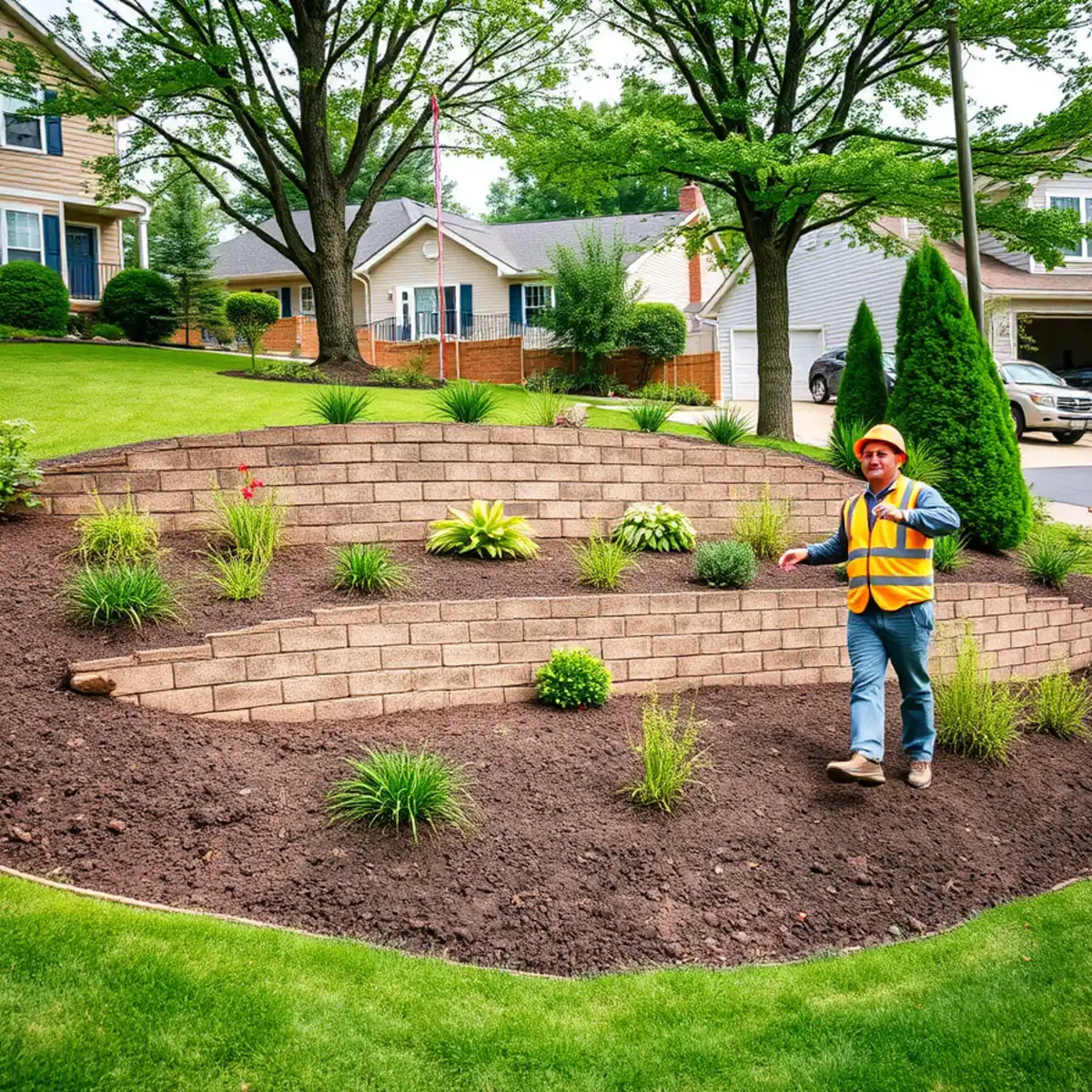
Retaining walls in Hobart, IN succeed or fail on what's behind the block, not the block itself. A retaining wall does quiet, heavy work: it holds back a slope, stops erosion, and turns ground you can't use into ground you can. The catch is that most walls don't fail because of the block on the face — they fail because of what's behind it. Water builds up against a wall with no drainage, freezes, and pushes until the wall bows, leans, or blows out. Romes Property Maintenance builds segmental block retaining walls the right way for Hobart: proper base, compacted gravel backfill, and drainage engineered behind every course so our freeze-thaw winters and water-holding clay don't get the last word.
When you need a retaining wall
Homeowners across The Region call us when the land itself is the problem:
- A slope that's washing away. Bare hillsides shed mulch, topsoil, and seed with every hard rain until nothing will grow.
- Ground you can't use. A grade too steep to mow, plant, or set a patio on — wasted square footage.
- Water running toward the house. A yard that pitches at the foundation instead of away from it.
- An old wall that's failing. Timber walls that have rotted, or block walls built with no drainage that are now leaning and bulging.
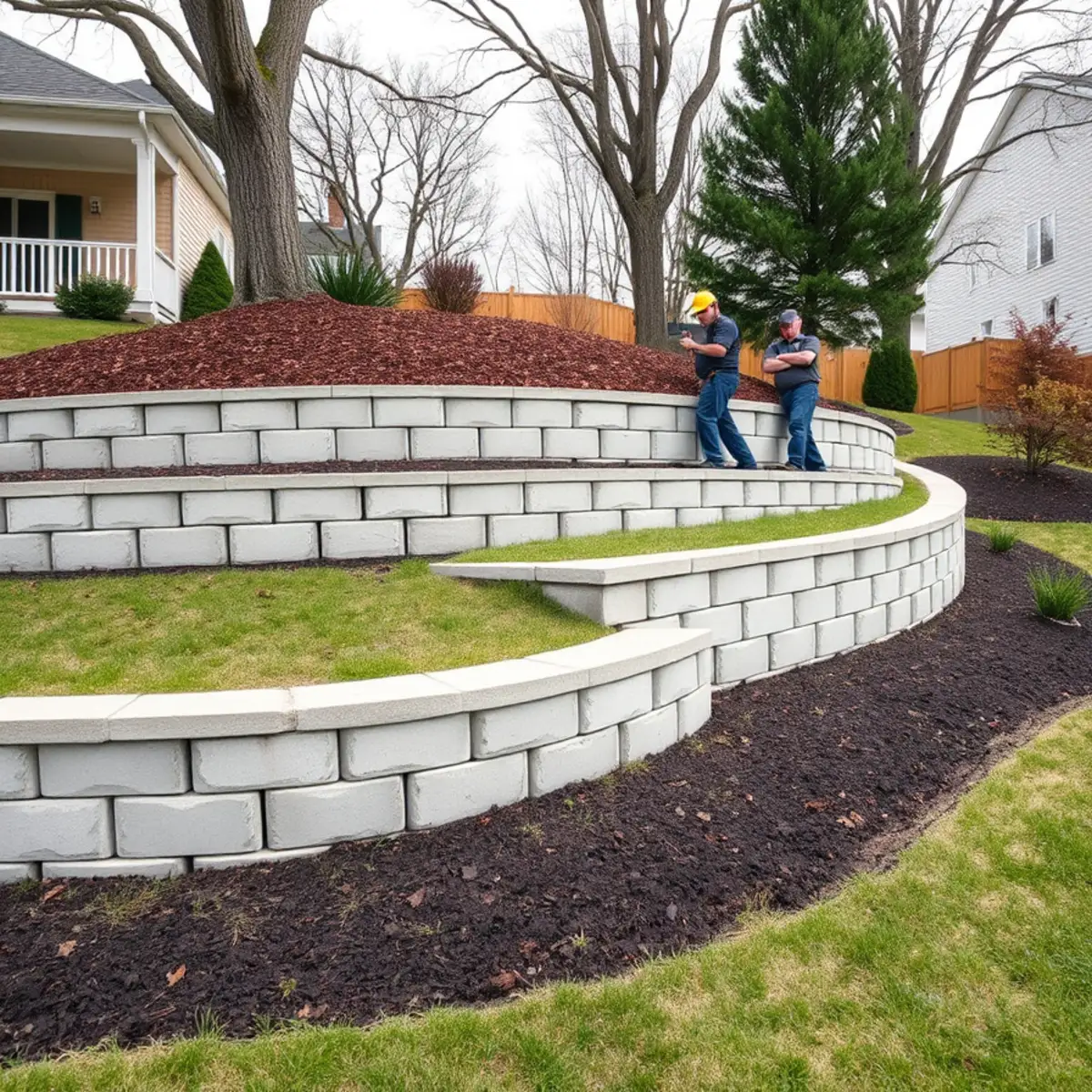
- A need for terraces. A long slope that would work better as two or three level tiers than one big drop.
If your yard has a hill fighting you, a wall built correctly turns that liability into usable, planted, level space.
What's included
Every wall we build is a complete system, not just stacked block. A retaining wall project includes:
- On-site assessment of the slope, soil, and where water travels before we quote.
- Excavation and a deep, compacted stone base — the footing everything above depends on.
- A dead-level first course, set and checked before we build up.
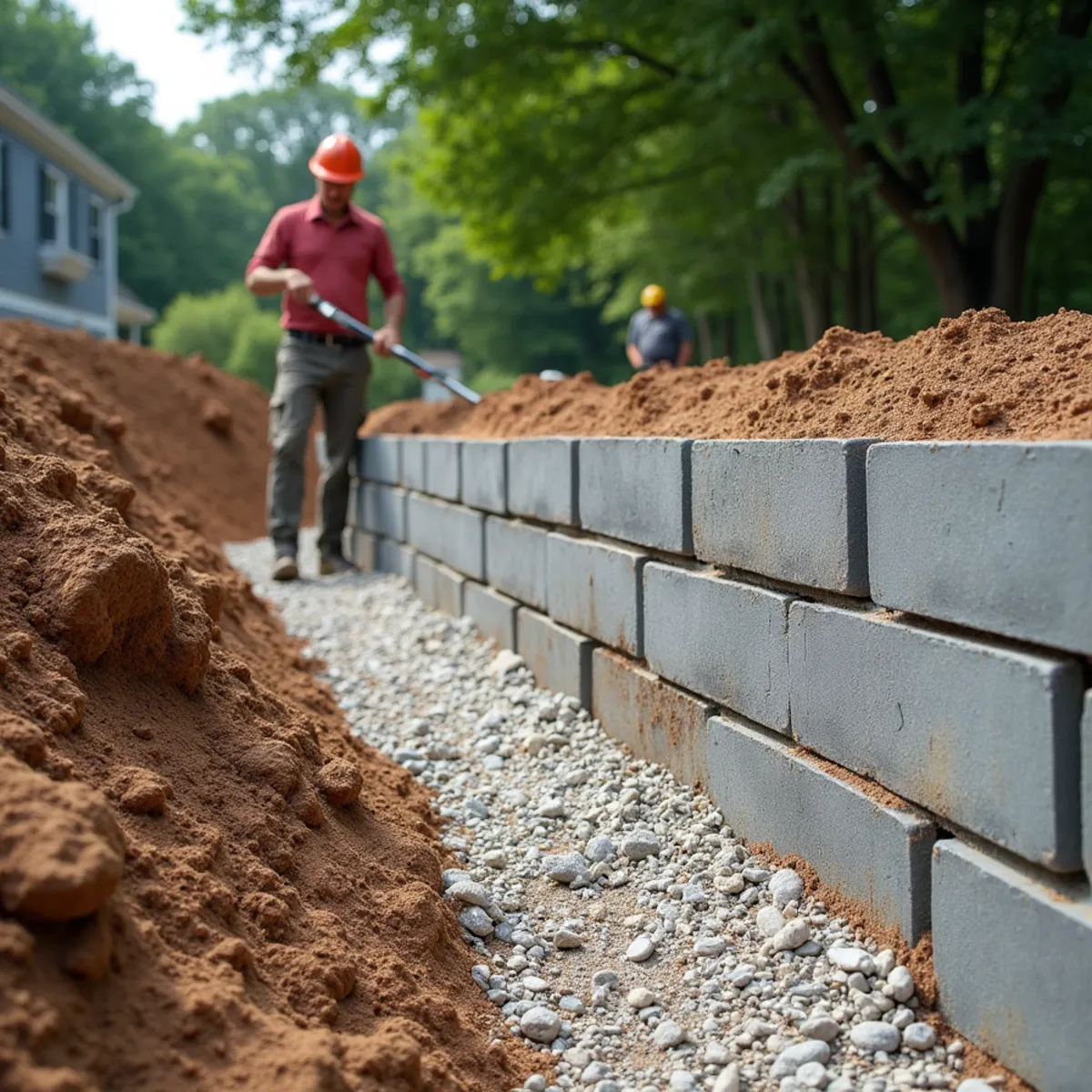
- Clean crushed-stone gravel backfill and drain pipe behind the wall to relieve water pressure.
- Segmental block set with proper batter and reinforcement so the wall leans into the hill.
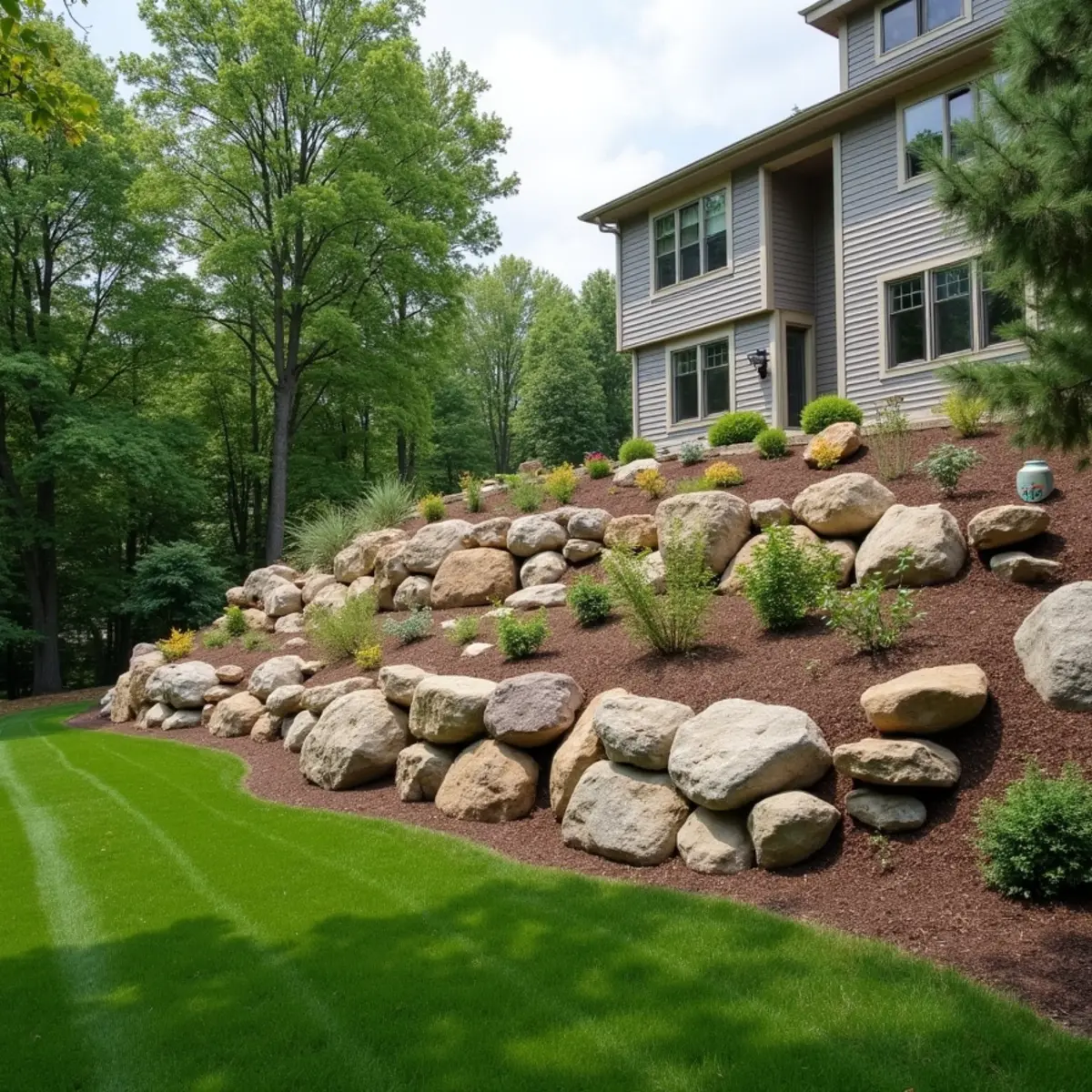
- Terracing where the slope calls for it — multiple level tiers instead of one tall wall.
- Cap stones and top grading so water sheds off the wall cleanly.
- Full cleanup — spoil hauled off and the hardscape pressure-washed before we leave.
How we build a wall that stays put
The difference between a wall that lasts decades and one that fails in a few winters is all in the steps you can't see once it's done.
- Free on-site estimate. We read the slope, the soil, and where water travels, then figure out the wall height, length, and whether terracing makes sense.
- Excavation and base. We dig out for a deep, level trench and build a compacted stone base. A wall is only as straight and stable as the footing under its first course.
- First course, dead level. We set and check the base course obsessively — every course above it depends on this one being right.
- Gravel backfill and drainage. Here's the part cheap installs skip: we backfill behind the wall with clean crushed stone and run drainage so water can escape instead of building pressure against the block. On Hobart clay, this is what saves a wall from freeze-thaw failure.
- Building up with proper setback. We stack and lock each course with the correct batter and reinforcement so the wall leans slightly into the hill it's holding.
- Capping and finishing. We set the cap stones, backfill the top, and grade so water sheds off the top of the wall cleanly.
- Cleanup. We haul off spoil, pressure-wash the hardscape, and leave the site tidy.
Retaining walls often anchor a bigger plan. A terraced wall can create the flat pad for a new paver patio or walkway, it works alongside broader drainage and grading solutions to get water off your lot, and it frequently comes together with a full landscape design and installation so the new terraces get planted and finished, not just held.
What affects the cost of a retaining wall
We quote every wall on-site and for free, because height, soil, and drainage drive the number far more than face footage alone. Factors include:
- Height and length — taller walls carry more load and need more base, reinforcement, and engineering.
- Block type — standard segmental block versus larger or premium-face units.
- Base and backfill — how much excavation, stone base, and gravel backfill your slope and clay require.
- Drainage — the pipe and stone system behind the wall that keeps water from building pressure.
- Terracing — a single wall versus multiple stepped tiers.
- Access and slope — steep or tight sites take more labor and equipment time.
For a sense of what shapes a fair quote before we meet, our guide to retaining wall cost in Northwest Indiana breaks down the same factors. Not sure a wall is even what your yard needs? Do you need a retaining wall? walks through the signs and the alternatives, and retaining wall materials compared weighs block, natural stone, and boulders.
Why Hobart homeowners choose Romes for retaining walls
A retaining wall is one of the few landscape jobs where cutting a corner you can't see costs you the whole wall a few winters later. That's why homeowners hire a local crew that builds the drainage in and stands behind the work. Romes Property Maintenance has served Northwest Indiana for more than eight years and earned 69 Google reviews at a 4.7-star average. The owner, William “Rome” Romero, is on-site with a hands-on crew — the same people from estimate to final cap.
- 69 Google reviews, 4.7-star average from Region homeowners.
- 8+ years serving Northwest Indiana, building for local clay and freeze-thaw.
- Locally owned and operated — Rome and his crew do the work.
- Licensed and insured before the first shovel goes in.
- Free, no-pressure on-site estimates with a clear written quote.
- One crew for the whole property — wall, drainage, terracing, and planting.
- Detail-obsessed cleanup — we haul off spoil and wash down drives and walks when we finish.
Retaining walls across Hobart & Northwest Indiana
We build retaining walls throughout The Region, from our home base in Hobart out to Merrillville, Crown Point, Valparaiso, Portage, and Schererville. Every one of these towns sits on the same water-holding clay and takes the same freeze-thaw winters, so every wall we build there gets the same drainage engineered behind it. If your slope is anywhere in Lake or Porter County, we can get to you.
Ready to take back that slope?
A slope doesn't have to be wasted ground or a washout waiting to happen. Let Rome's crew build a segmental block retaining wall engineered for Hobart clay and freeze-thaw — with the drainage behind it that makes a wall last. Reach out through our contact page or request your free on-site estimate, and we'll turn that hill into level, usable, good-looking space.
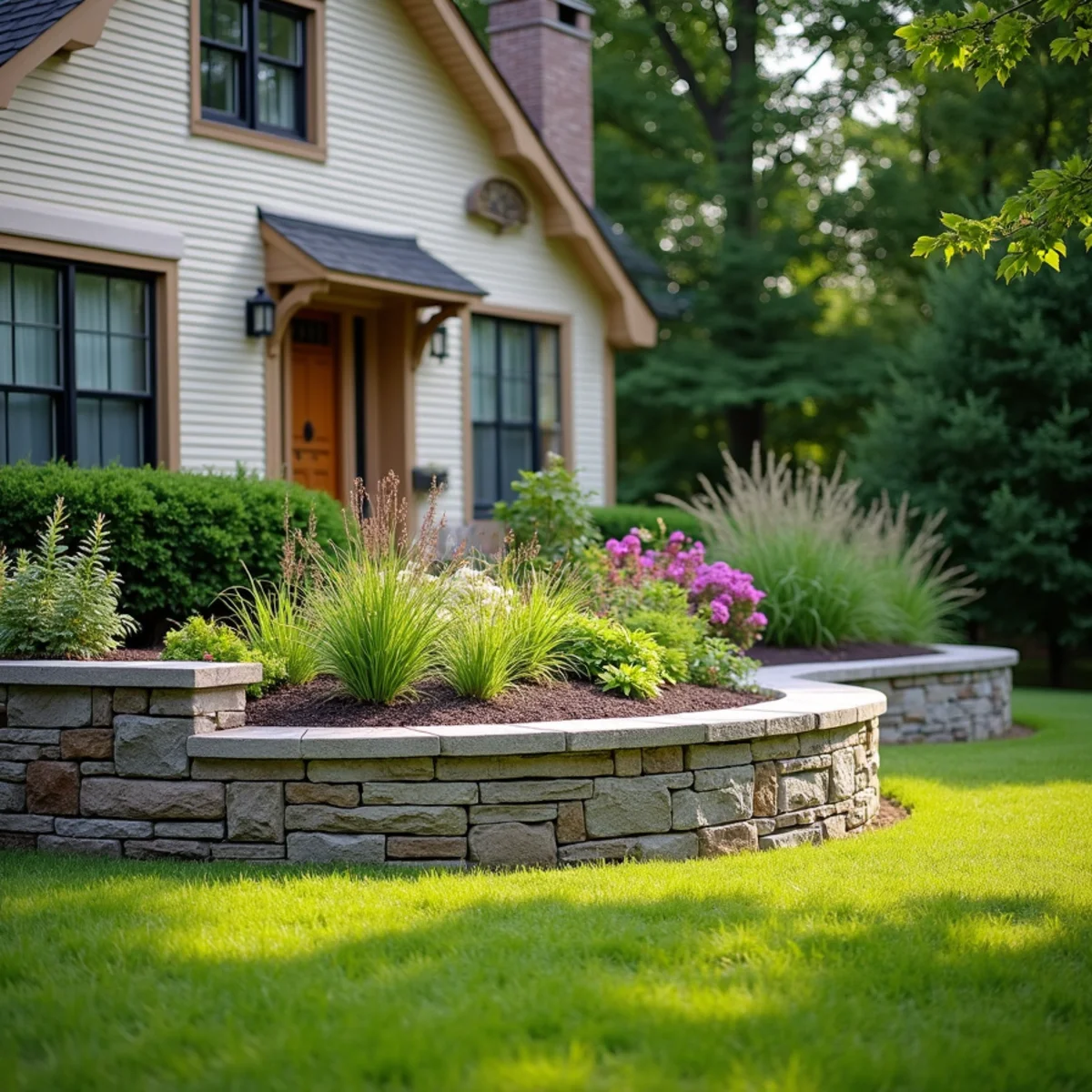
Retaining Walls: how we do it
Frequently asked questions
Why do retaining walls lean or fail?
Almost always because of water and drainage — or the lack of it. When there's no gravel backfill and drain behind the wall, water saturates the clay, freezes, expands, and pushes the wall out of plumb. Build the drainage right and the wall stays put. It's the single most important thing we do behind the block.
Do I need a permit for a retaining wall?
It depends on the height and your local rules. Taller walls often require a permit and sometimes engineering. We'll flag that during the free estimate and build to code so you're covered.
What's the difference between a retaining wall and terracing?
A retaining wall holds one grade change; terracing breaks a long slope into several shorter, level steps with a wall at each. Terracing can be easier to plant and often looks better on a big hill. We'll tell you which fits your yard.
How should I handle the drainage around my wall?
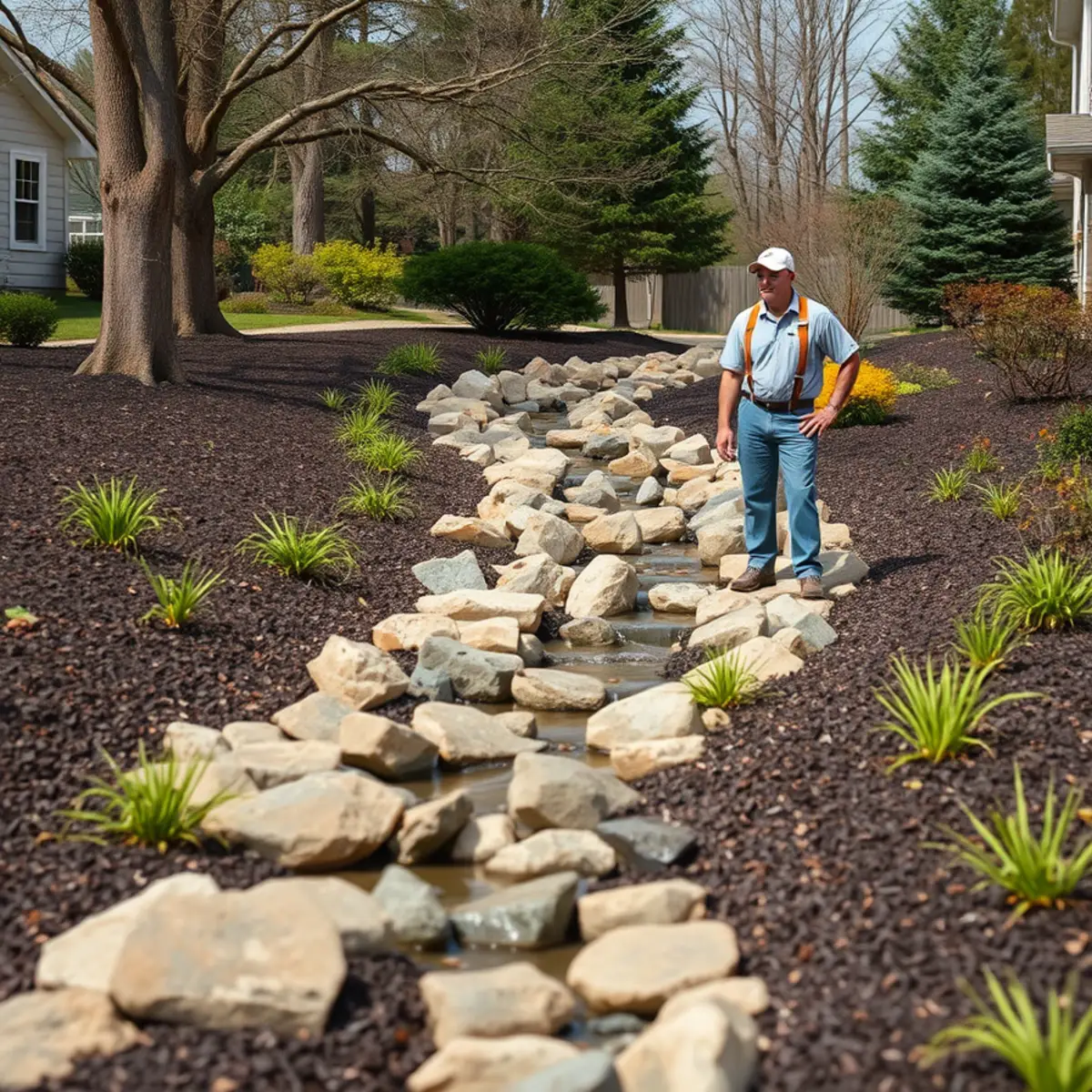
Behind the wall, we build it in with gravel and drain pipe. Across the rest of the yard, a wall pairs well with a broader plan — our comparison of a French drain vs. a dry creek bed explains the surface and subsurface options for moving water off your property.
How long does a retaining wall last?
Built correctly — deep base, compacted backfill, drainage behind every course — a segmental block wall lasts decades with almost no upkeep. The walls that fail early are the ones built with no drainage on clay. We build for the long haul, which is why our warranty conversation happens right at the estimate.
Can you repair or replace a failing wall?
Yes. Rotted timber walls and bulging block walls with no drainage are some of our most common jobs. We take out what's failing, fix the base and drainage that caused it, and rebuild with segmental block that will actually hold. Often the new wall costs less to maintain than patching the old one.