A store-bought fire pit costs less and you can use it tonight, but metal rings rust out in a few seasons and loose-stacked stone kits shift and topple. A built-in masonry fire pit costs more up front and lasts decades — a permanent, safe feature set on a proper base that anchors a whole outdoor living space. Which is right comes down to whether you want a quick accessory or a lasting part of the yard.
A fire pit is what stretches Northwest Indiana's short patio season at both ends — the cool evenings of April and October come back onto the calendar once you've got a reason to sit outside. But "fire pit" covers everything from a $150 steel bowl to a masonry build tied into a patio and seating walls. Here's how the two really compare so you spend on the right one.
Store-bought fire pits: fast and cheap
The appeal is obvious — buy it, set it down, light it the same night, spend little.
- Lowest up-front cost and instant gratification.
- Portable — move it or take it with you.
- No construction — nothing to plan or dig.
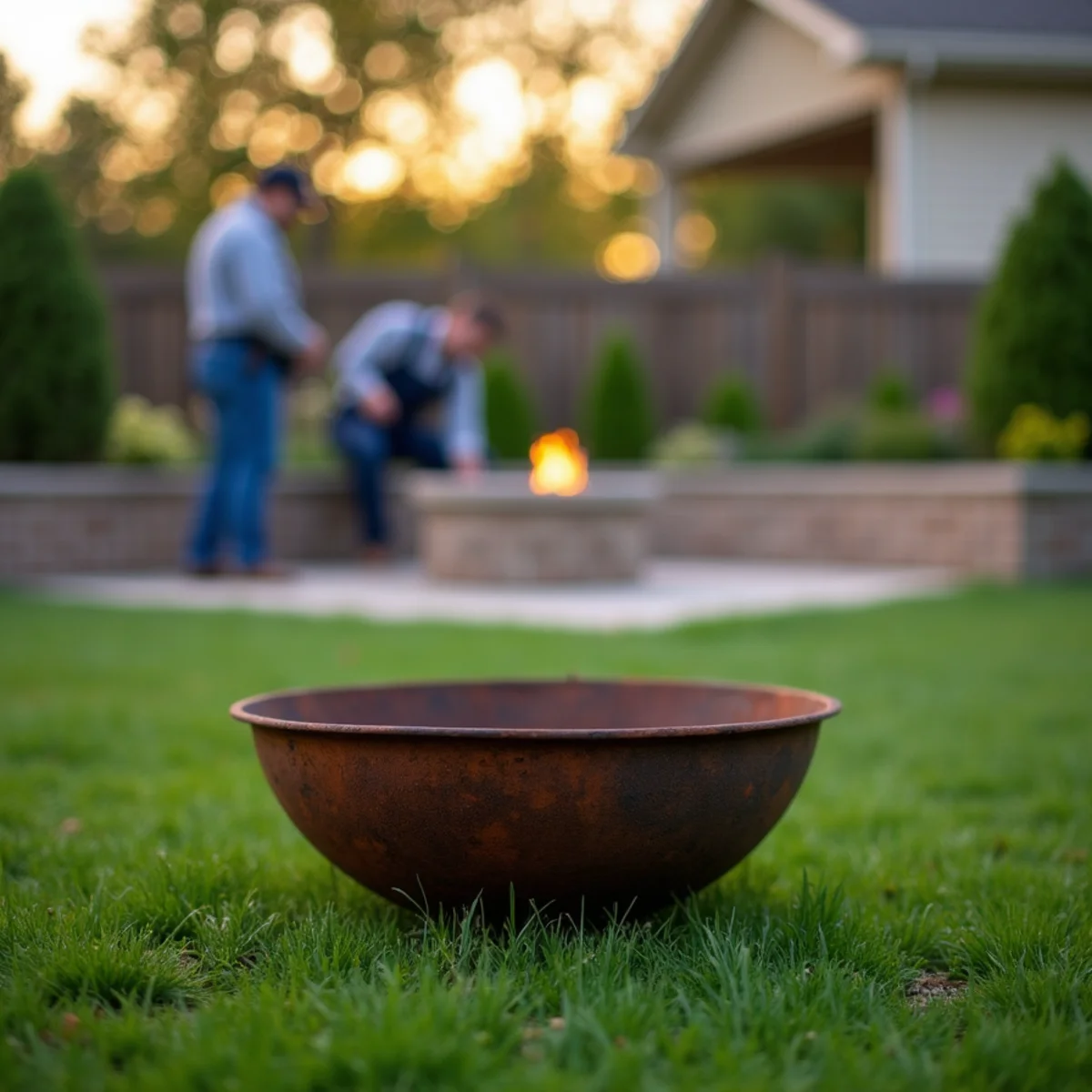
The tradeoffs show up fast in our climate. Big-box steel pits rust out within a few seasons, especially left out through freeze-thaw winters. Loose-stacked stone "kits" have no real base, so they shift, settle unevenly, and topple — which is both a disappointment and a safety issue around an open flame. And a portable ring never becomes part of the yard; it's an object sitting on the grass, not a destination.
Built-in masonry fire pits: permanent and safe
A built-in fire pit is a masonry structure — fire-rated block and pavers, a properly seated ring, and a level cap — set on a deep, compacted, well-drained base.
- Lasts decades, because it's built from materials made for heat and set on a base that survives freeze-thaw instead of heaving.
- Safe and stable — a solid, level structure that won't wobble, rust through, or tip.
- Anchors an outdoor room — paired with seating walls and a patio, it turns a plain backyard into the place everyone ends up.
- Blocks the wind — seating walls around it cut the lake breeze that otherwise ends an evening early.
- Adds real value — a permanent outdoor living feature reads as a premium upgrade, not a yard accessory.
The tradeoffs are honest: it costs more, it's a planned project rather than a same-day purchase, and it stays where you build it.
The part that decides whether it lasts: the base
Here's what separates a fire pit that's level in ten years from one that heaves in three — the same thing that governs every hardscape project on our clay. A built-in pit (and the patio around it) needs deep excavation and a compacted, well-drained aggregate base. Skip that and freeze-thaw shoves the whole thing around every winter. It's the unglamorous part you never see, and it's exactly where a cheap build cuts the corner — the same base-first principle behind our paver patios and hardscaping. We build fire pits and outdoor living spaces on that foundation so the structure stays put.
Which should you choose?
- Choose store-bought if you want fire tonight, you're renting or unsure about staying, or the budget is tight and you accept replacing it every few years.
- Choose built-in if you want a permanent gathering spot, you're finishing a patio, you want seating and wind protection, or you're tired of replacing rusted-out rings.
Most homeowners who've burned through a store-bought pit or two end up building the permanent one they wanted from the start.
Ready to build a fire pit that lasts?
If you're tired of replacing rusted rings, a built-in masonry fire pit turns your yard into the spot everyone gathers — built on a base that survives our winters. Rome and the crew design and build outdoor living spaces across Hobart, Crown Point, and Northwest Indiana. Reach out through our contact page for a free on-site estimate.
Frequently asked questions
Are built-in fire pits worth the extra cost?
For most homeowners who use their yard, yes. A masonry fire pit lasts decades instead of a few seasons, won't rust or topple, anchors an outdoor living space, and adds real property value. Store-bought pits cost less today but get replaced repeatedly — the built-in often wins on both cost and enjoyment over time.
Why do store-bought fire pits fail so fast here?
Northwest Indiana freeze-thaw and moisture rust out steel pits within a few seasons, and loose-stacked stone kits have no real base, so they shift and topple. Neither is built for our winters the way a masonry pit on a compacted, drained base is.
Can you build a fire pit into my existing patio?
Usually, yes — it depends on how your patio was built and its base. We can often add a fire pit and seating walls tied into the existing space, or rebuild the base where needed so the whole thing stays level. We'll assess it at the estimate.
Wood-burning or gas?
Both work. Wood-burning gives you the classic crackle and bonfire feel; gas offers instant on-off convenience and no smoke. We build for either — the structure and base are the same; the difference is the burner and whether we plumb for gas.
Need help with paver patios?
The crew behind this guide handles hardscaping & paver patios across Hobart and Northwest Indiana. Get a free, no-pressure on-site estimate.