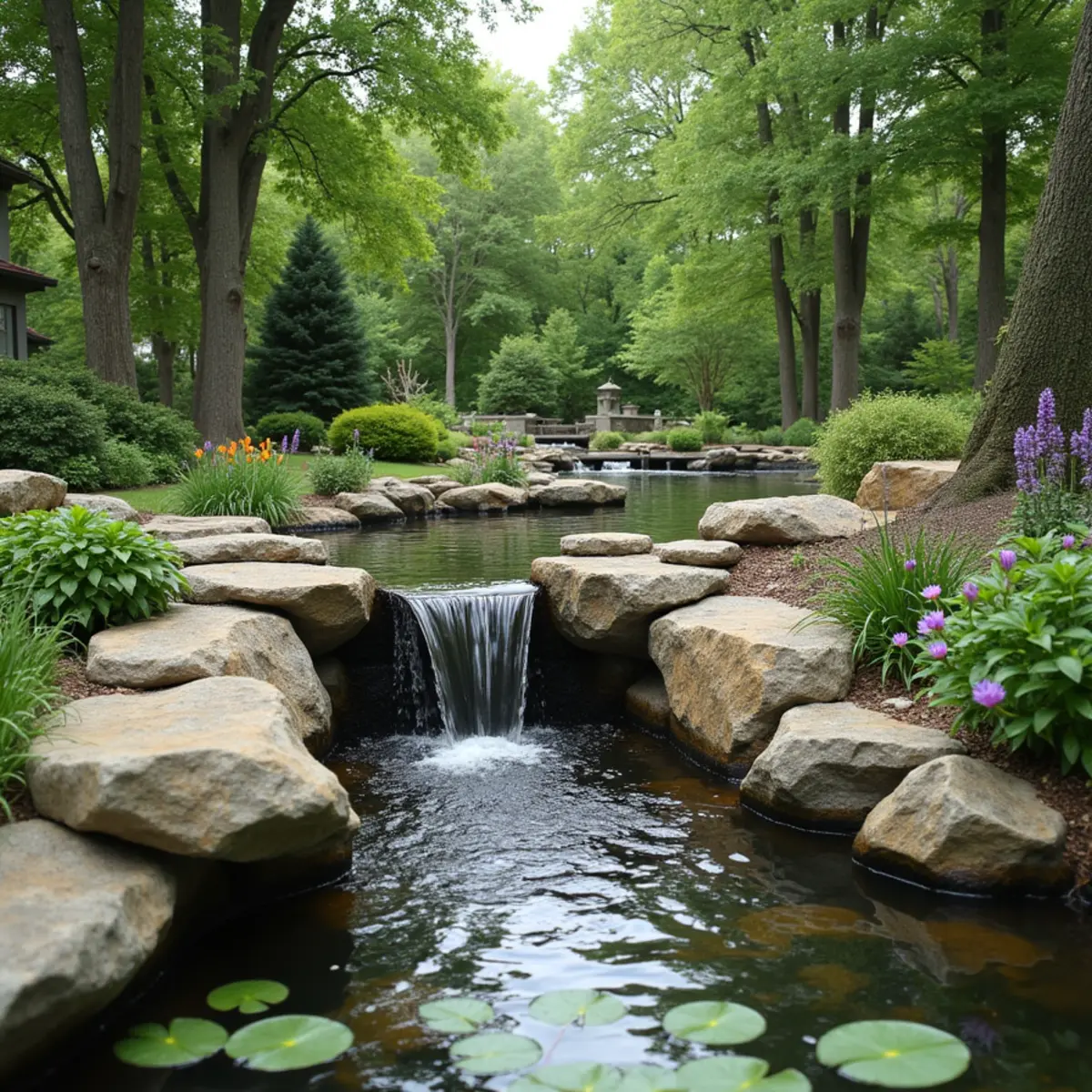
A pondless waterfall gives you the sight and sound of moving water with no open pool — the water recirculates into a hidden underground basin — which means low maintenance, no algae-prone standing water, and nothing for small kids to fall into. A pond gives you fish, aquatic plants, and a full water garden, but more upkeep and more to manage on clay. On Northwest Indiana's heavy soil, the pondless option is the smarter default for most yards.
The sound of moving water changes a backyard — it softens road noise, draws birds, and gives a patio a reason to linger. But "water feature" splits into two very different projects: a pondless waterfall or a true pond. On our clay, the choice matters more than looks alone, because a water feature built carelessly becomes one more low spot that floods the yard. Here's how the two compare.
Pondless waterfalls: the water without the pool
A pondless waterfall is a waterfall and stream that recirculate into a hidden, gravel-filled basin underground — all the sight and sound, no open pool of standing water.
- Low maintenance. No large body of water to balance, skim, or manage — far less fuss than a pond.
- Safe around kids and pets. There's no open water to fall into, which puts a lot of families at ease.
- Algae-resistant. Constantly moving, hidden water gives algae much less chance to take hold than a still pond.
- Clay-friendly. With no standing pool and a planned overflow, it's far less likely to turn into a drainage problem.
- Flexible scale. From a single bubbling boulder (a "disappearing fountain") to a multi-step stream.
The tradeoff: no fish, and no open water-garden look if that's specifically what you're after.
Ponds: a full water garden
A true pond is an open, lined body of water for fish, aquatic plants, and the full ecosystem feel.
- Fish and plants. Koi, lilies, marginal plants — a living aquatic garden you can't get from a pondless feature.
- The classic look. An open reflective surface is a different, more dramatic presence in the yard.
The tradeoffs are real, especially here: more maintenance (filtration, cleaning, water balance, and keeping it clear), more to get right on clay so overflow doesn't flood beds, and open water that families with small children often want to avoid. Done well, a pond is beautiful; it's just a bigger commitment.
Why clay tips the scale toward pondless
Here's the Northwest Indiana reality. Our dense clay doesn't absorb overflow, so a poorly sited feature backs up and floods nearby beds or runs toward the foundation. A still pond with an undersized pump also breeds algae and mosquitoes if the water isn't kept moving. A pondless design sidesteps most of that — moving water, no standing pool, and a deliberately planned overflow path. That's why we steer many homeowners toward pondless and disappearing features: they deliver the sound and beauty without adding a drainage headache. On a yard that already struggles with water, that's the difference between an asset and a problem.
Which fits your yard?
- Choose pondless if you want low maintenance, safety around kids, the sound of water, and peace of mind on clay — the right call for most Region yards.
- Choose a pond if you specifically want fish and an aquatic garden and you're ready for the upkeep and the careful siting it takes to do it right here.
Either way, the feature has to be built with overflow, pump sizing, and freeze-thaw in mind — that's what separates a feature that runs clear for years from one that turns green or cracks over winter.
Ready to add the sound of water — the right way?
A pondless waterfall or a full pond can transform a yard, but on clay it has to be engineered underneath, not just dropped in. Rome and the crew design and build water features across Hobart, Valparaiso, and Northwest Indiana — beautiful on top, drained properly beneath. Reach out through our contact page for a free on-site estimate.
Frequently asked questions
Is a pondless waterfall cheaper than a pond?
Often, but the bigger difference is ongoing cost and upkeep. A pondless waterfall has no large body of water to filter, balance, and clean, so it costs less to run and maintain year to year. A pond's price depends on size, liner, filtration, and depth for fish — and it asks more of you after it's built.
Do water features make drainage worse on clay?
Only if they're built carelessly. Clay doesn't absorb overflow, so a feature sited without a planned overflow path can flood nearby beds. Built right — with deliberate grading and overflow — a pondless feature avoids that entirely, which is why it's usually the smarter choice on our soil.
Are pondless waterfalls safe for kids?
Yes — that's a big reason families choose them. There's no open pool of standing water, just water moving over stone into a hidden underground basin, so there's nothing for a small child to fall into while you still get the sound and movement.
What happens to a water feature in winter?
A properly built feature is designed for freeze-thaw with the right liner, depth, and a seasonal shut-down plan. Features built without that crack their basins and plumbing. We build for zone 5b/6a and set them up for a clean winter shutdown.
Need help with water features?
The crew behind this guide handles water features & waterscaping across Hobart and Northwest Indiana. Get a free, no-pressure on-site estimate.