
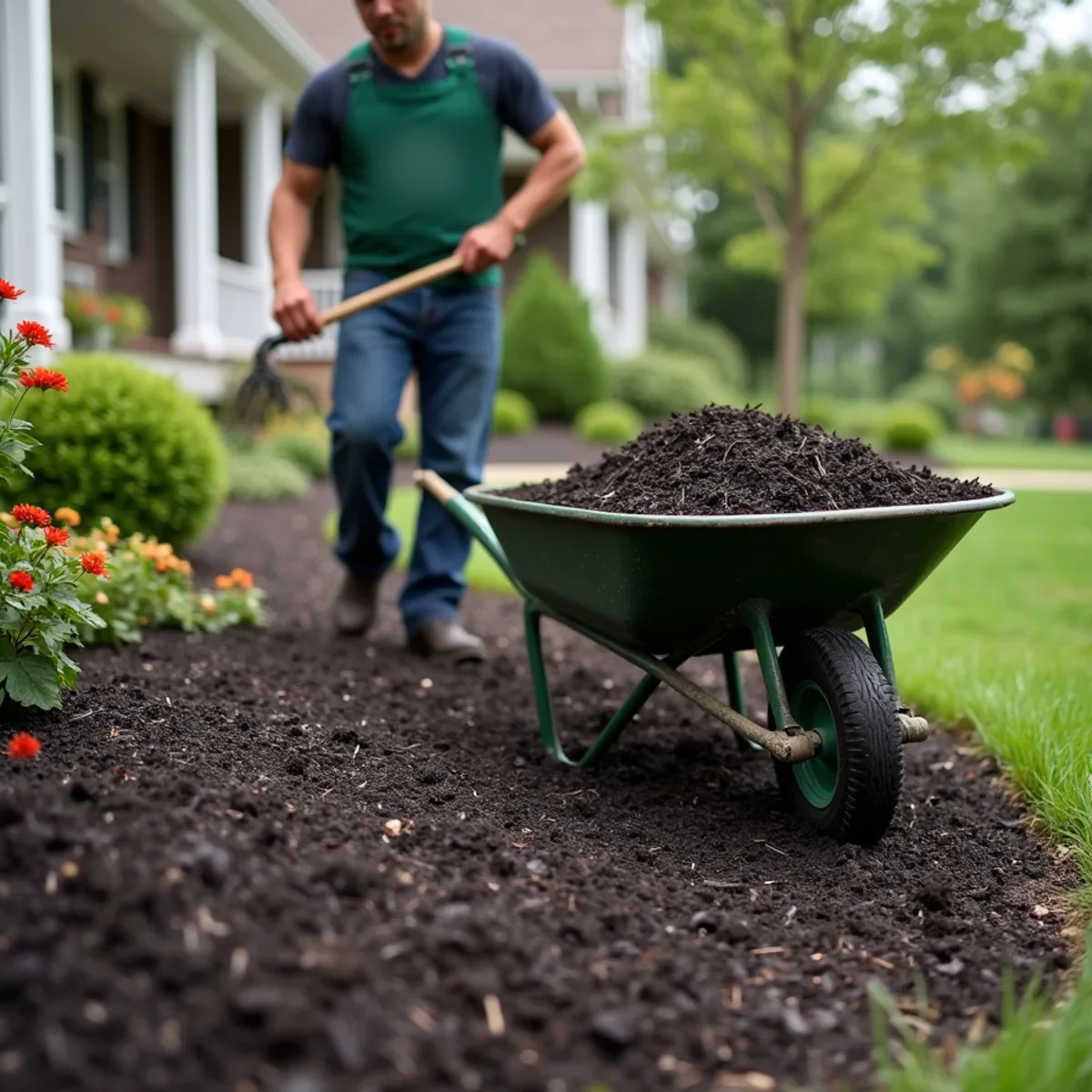
To mulch a bed, you want a 2–3 inch layer, and the math is simple: multiply the bed's square footage by the depth in inches, divide by 324, and that's roughly how many cubic yards you need. In Northwest Indiana the bigger questions are usually when to mulch, how deep is too deep, and how to keep from burying your plants — so here's the full picture.
Fresh mulch is the fastest way to make a whole property look cared for — it defines the beds, locks in moisture, and smothers weeds. But mulch done wrong is one of the most common ways we see good plantings quietly killed. Here's how to get the amount, the timing, and the technique right for a Region yard.
How to figure out how much you need
The quick formula for a 3-inch layer:
- Measure each bed's area in square feet (length × width).
- Multiply the total square footage by the depth you want in inches.
- Divide by 324 to get cubic yards. (324 = the square feet one cubic yard covers at 1 inch deep.)
So a 300-square-foot bed at 3 inches: 300 × 3 ÷ 324 ≈ 2.8 cubic yards. Bagged mulch is usually 2 cubic feet a bag, and there are 13.5 bags in a cubic yard — but past a bed or two, bulk by the yard is cheaper and far less plastic to haul. For a whole property, buying and spreading by the yard is where a crew earns its keep.
How deep — and why more isn't better
Aim for 2 to 3 inches. That's enough to suppress weeds and hold moisture without suffocating roots. Piling it deeper is the single most common mulch mistake:
- Too-deep mulch stays soggy, rots stems, and can starve roots of oxygen.
- On our heavy clay, which already drains slowly, a thick mulch blanket keeps the ground too wet and invites disease.
- When you re-mulch each year, don't just add three more inches on top. Rake and loosen what's there, and top up only to bring it back to depth.
Never build a "mulch volcano"
Piling mulch up against a tree trunk or shrub base — the cone-shaped "volcano" you see everywhere — traps moisture against the bark, invites rot, insects, and girdling roots, and slowly kills the plant. Keep mulch pulled back a few inches from trunks and stems so the base can breathe. A proper bed looks like a flat doughnut, not a volcano.
When to mulch in Northwest Indiana
- Spring (the main one): mid-to-late spring, once the soil has warmed and after you've done bed cleanup and any pre-emergent. Mulching too early over cold, wet ground just keeps it cold and wet.
- Fall (optional): a lighter top-up heading into winter helps insulate roots and keeps beds tidy.
Once a year is plenty for most Region yards — a refresh to restore color and depth, not a full new layer every time.
Getting the bed right first
Mulch is the finish, not the fix. Before it goes down, the bed should be edged, weeded, and shaped — otherwise you're just burying weeds that push right back through. We handle the whole reset as part of mulching and shrub removal: pull the overgrowth, re-cut clean edges, amend tired soil, and then lay fresh mulch at the right depth. If you're reworking beds entirely, that's where landscape design and installation comes in — and tough clay-friendly plants that won't need babying once they're mulched in.
Ready for beds that look sharp all season?
Fresh mulch at the right depth transforms a property — but only over beds that are edged, weeded, and prepped first. Rome and the crew handle the whole job across Hobart, Schererville, and Northwest Indiana, so the mulch does its work instead of burying problems. Reach out through our contact page for a free on-site estimate.
Frequently asked questions
How many inches of mulch should I use?
Two to three inches is the sweet spot — enough to block weeds and hold moisture without suffocating roots. Deeper than that, especially on clay that already drains slowly, keeps the ground too wet and can rot stems and starve roots. When refreshing, top up to 2–3 inches total rather than adding a full new layer each year.
How do I calculate how much mulch I need?
Multiply the bed's square footage by the depth in inches, then divide by 324 to get cubic yards. For example, 300 square feet at 3 inches deep is about 2.8 cubic yards. Buying in bulk by the yard is cheaper than bags once you're past a small bed.
When should I put down mulch in Indiana?
Mid-to-late spring is the main window — after bed cleanup and once the soil has warmed, so you're not trapping cold and moisture. A lighter fall top-up is optional for winter insulation and tidiness. Once a year is enough for most yards.
Why shouldn't mulch touch the tree trunk?
Mulch piled against a trunk traps moisture on the bark and invites rot, insects, and girdling roots that slowly kill the tree. Keep it pulled back a few inches so the base stays dry and can breathe — a flat ring, never a volcano.
Need help with mulch & shrub removal?
The crew behind this guide handles mulching & shrub removal across Hobart and Northwest Indiana. Get a free, no-pressure on-site estimate.