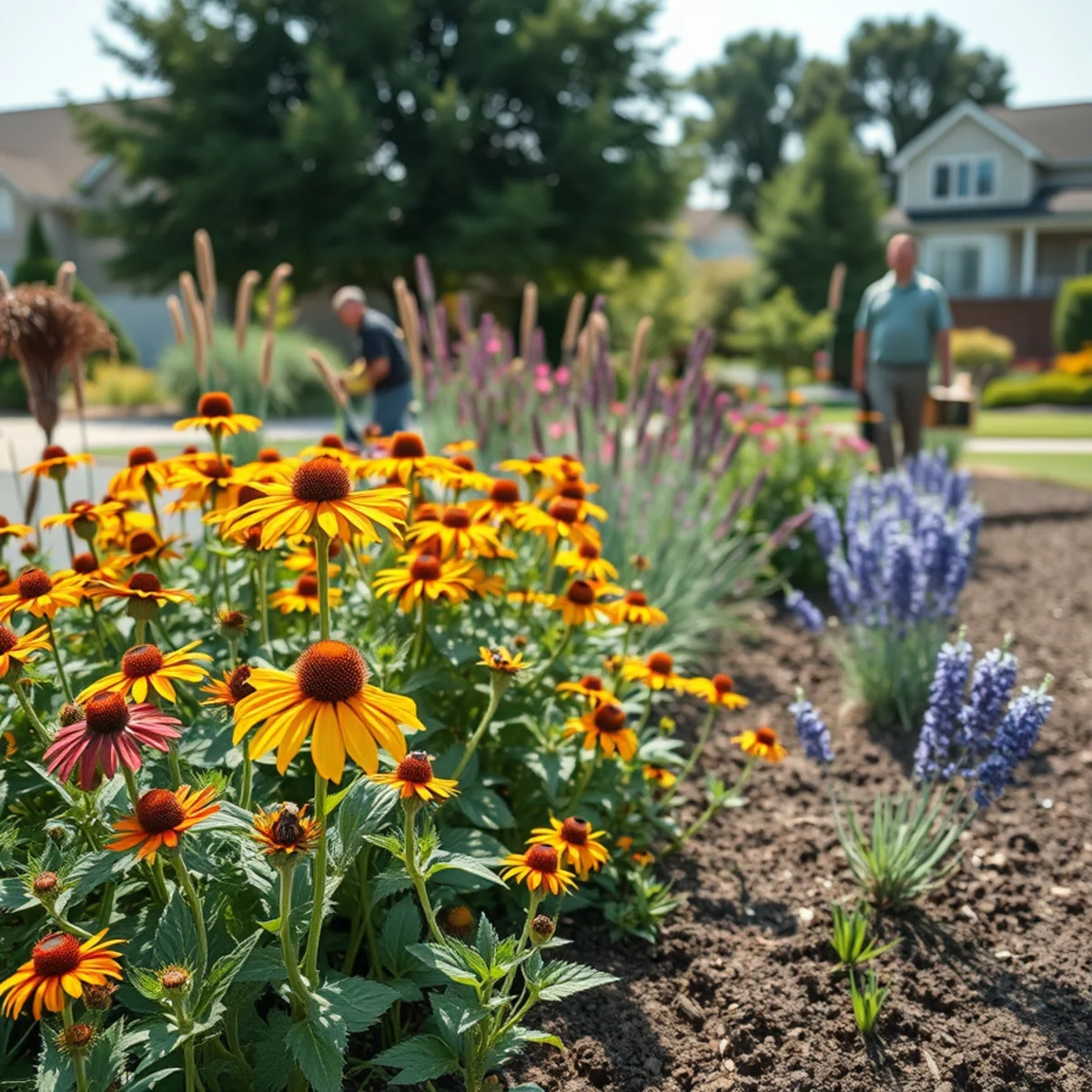
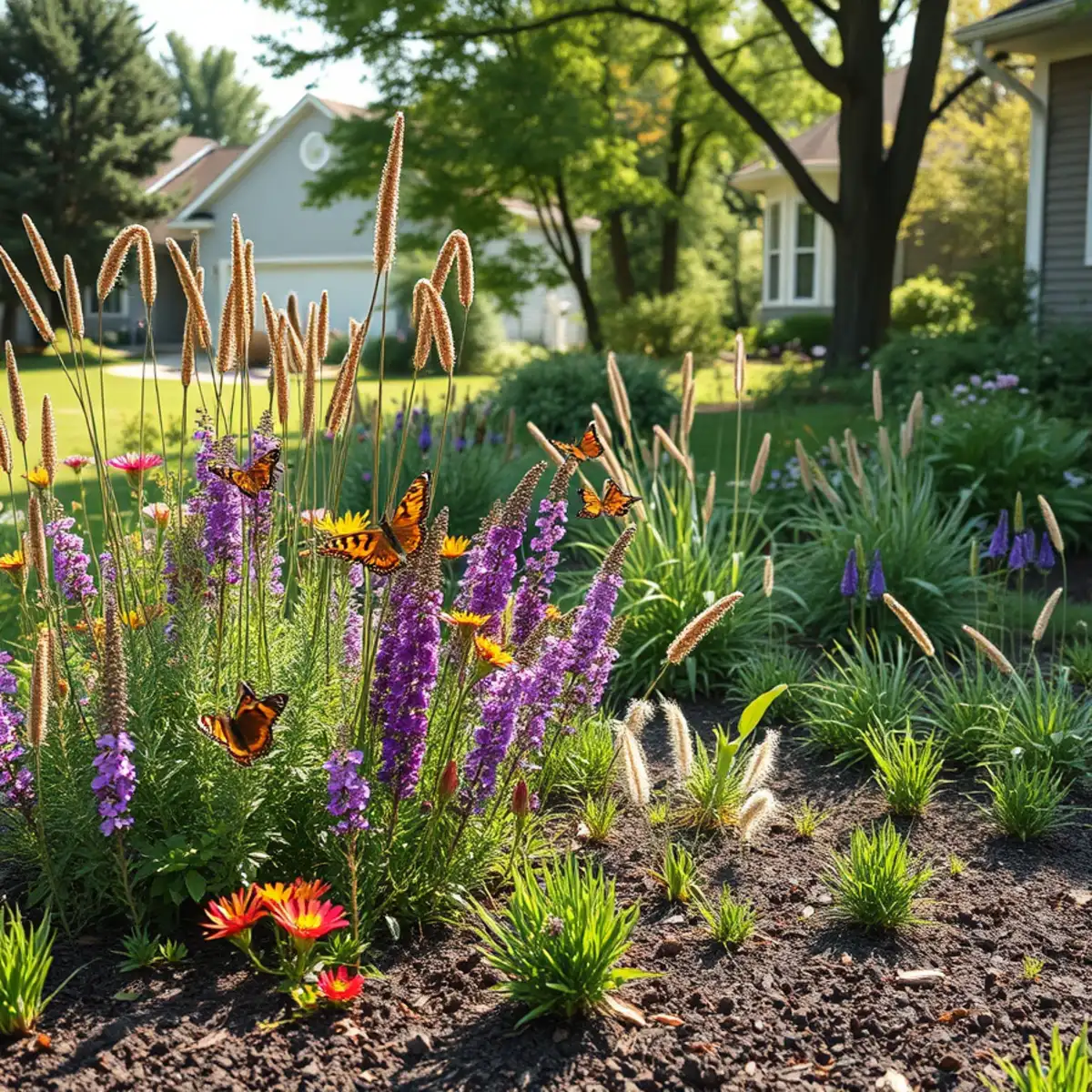
The native plants that thrive across Northwest Indiana are the prairie and savanna species that evolved for our clay and climate — coneflower, black-eyed Susan, wild bergamot, and butterfly milkweed among the forbs, little bluestem and prairie dropseed for grasses. Once established, they need no irrigation, no fertilizer, and feed local pollinators.
Northwest Indiana was prairie and oak savanna long before it was subdivisions. The plants that grew here for thousands of years didn't need irrigation, fertilizer, or a homeowner fussing over them — they were built for our clay soil, our humid summers, our brutal winters, and the wet-then-dry swings in between. That's the whole case for native landscaping in a nutshell. When you plant what already belongs here, the plants do the hard work instead of you. This guide covers the natives that thrive in The Region, why they're worth it, and how to use them so your yard looks intentional, not overgrown.
Why natives make sense on our ground
The pitch for native plants isn't just about wildlife, though that's a big part of it. It's practical.
- They laugh at our clay. Deep-rooted prairie plants evolved in heavy soil. Many send roots down several feet, which lets them find water in a dry August and anchors soil against erosion.
- Almost no watering once established. After the first season, most natives get by on rainfall alone. In a region where summer storms alternate with dry spells, that's a real advantage.
- No fertilizer treadmill. Natives are adapted to lean soil. Feeding them hard actually makes them flop over.
- They feed pollinators. Native bees, butterflies, and songbirds depend on native plants. A yard with the right forbs and grasses becomes a genuine habitat, not just decoration.
- Cold-hardy by design. Everything on the list below sails through our zone 5b/6a winters and the lake-effect cold without protection.
The natives we plant most in The Region
You don't need a botany degree. A handful of reliable, good-looking natives will carry most yards. Here are the workhorses.
Prairie forbs (the flowers)
- Wild bergamot (bee balm). Lavender, shaggy flowers that bloom mid-summer and pull in bees and hummingbirds. Handles clay and drought once rooted.
- Black-eyed Susan. The classic golden daisy of the Midwest. Tough, cheerful, and spreads gently to fill a bed.
- Purple coneflower. Sturdy stems, big daisy-like blooms, and seed heads that goldfinches strip through winter. A backbone plant.
- Butterfly milkweed. Brilliant orange, drought-proof, and the host plant monarchs can't reproduce without.
- New England aster. Late-season purple color when almost everything else is done, feeding pollinators before winter.
Native grasses (the structure)
- Little bluestem. A clumping grass that turns copper-red in fall and stands upright through snow. Perfect for clay and never needs babying.
- Prairie dropseed. Fine-textured, fountain-shaped, and tidy enough for the front of a bed. One of the most refined native grasses there is.
- Switchgrass. Taller and upright, great as a screen or backdrop, with good winter presence.
Shrubs
- Ninebark. Tough native shrub with peeling bark and white spring flowers; several colored-leaf varieties exist.
- Red-twig dogwood. Earns its keep in winter when the bare stems glow red against snow. Tolerates wet spots other shrubs hate.
- Serviceberry. A small tree or large shrub with spring flowers, edible berries, and fiery fall color — a genuine four-season plant.
For a deeper local plant list and sourcing help, the Indiana Native Plant Society is the authoritative resource, and Purdue Extension can help with a soil test so you match plants to your exact conditions.
Designing with natives so it reads as a garden, not a weed patch
The biggest worry we hear is that a native yard will look messy. It won't — if it's designed. The trick is giving wild plants a tidy frame.
- Plant in drifts, not singles. Groups of five or seven of one plant read as intentional. One of everything reads as chaos.
- Keep crisp edges. A clean mowed border or a defined bed edge around a native planting signals "this is on purpose." That visual cue does most of the work.
- Repeat plants and layer heights. Repeating the same coneflower or little bluestem through a bed ties it together. Layer tall grasses in back, forbs in the middle, low plants up front.
- Leave winter structure. Don't cut everything down in fall. Seed heads and standing grasses feed birds and look striking under snow. Cut back in early spring instead.
This is exactly the kind of planning our landscape design and installation team builds into a plan — reading your sun, slope, and soil first, then placing natives where they'll thrive and look deliberate.
Natives around water features and wet spots
If part of your yard stays soggy — and in Northwest Indiana, plenty of yards do — natives are your best friend. Instead of fighting a wet low spot, plant it with species that want wet feet: red-twig dogwood, blue flag iris, cardinal flower, and Joe-Pye weed all thrive where turf drowns.
Natives also make a stunning frame for a built water feature. Around a pond, fountain, or dry creek bed, prairie grasses and moisture-loving forbs soften the edges and blur the line between the feature and the landscape. If you're thinking about adding a pond, fountain, or waterscape, designing the native planting around it from the start makes the whole thing look like it grew there naturally.
From the field
The number one reason a native planting looks like a weed patch instead of a garden is the first-year gap. Natives spend their first season growing roots, not top growth — that butterfly milkweed you planted in May might be six inches tall in July and you'll swear it died. It didn't. It's putting a taproot two feet down. By year two it takes off, and by year three you can't believe it's the same plant. We tell every homeowner the same thing up front: judge a native bed at year three, not year one, and water it that first summer even though the tag says drought-tolerant.
The other trick we lean on is the mowed edge. A native bed with a crisp mowed strip or a clean spade-cut border around it reads as intentional to every neighbor who drives by, even when the middle is a riot of coneflower and bluestem. Skip that frame and the same plants read as neglect. It's the cheapest design move there is, and it's the one that keeps the HOA off your back.
Ready to plant what belongs here?
A native landscape is easier on your water bill, your weekends, and the pollinators that make a yard feel alive. Whether you're near the dunes in Chesterton or on a clay lot in Hobart, Rome's crew can design a native planting that fits your soil and actually looks finished. Reach out for your free on-site estimate and we'll walk your yard, talk through the right plants, and build a plan that thrives on Northwest Indiana's own terms.
Frequently asked questions
Are native plants really no-maintenance?
No plant is truly zero-maintenance, but established natives come close. They need watering the first season to root in, an annual cutback in early spring, and occasional weeding until they fill in. After that, they mostly take care of themselves — no irrigation, no fertilizer.
Will native plants attract too many bees or pests?
They attract pollinators, which is the point, but native bees are docile and focused on flowers, not people. Natives actually support the beneficial insects and birds that keep pest species in check, so a native yard tends to have a healthier balance overall.
Where can I buy native plants in Northwest Indiana?
Look for regional native-plant nurseries and the seasonal sales the Indiana Native Plant Society and local conservation groups hold. Avoid big-box "wildflower" mixes, which often include non-native or invasive species. We can also source the right plants as part of an installation.
Can I mix natives with my existing landscaping?
Absolutely. You don't have to convert the whole yard. Many homeowners in Chesterton and Hobart start by swapping a thirsty bed or a struggling foundation planting for natives, then expand once they see how well it holds up.
Need help with landscape design?
The crew behind this guide handles landscape design & installation across Hobart and Northwest Indiana. Get a free, no-pressure on-site estimate.