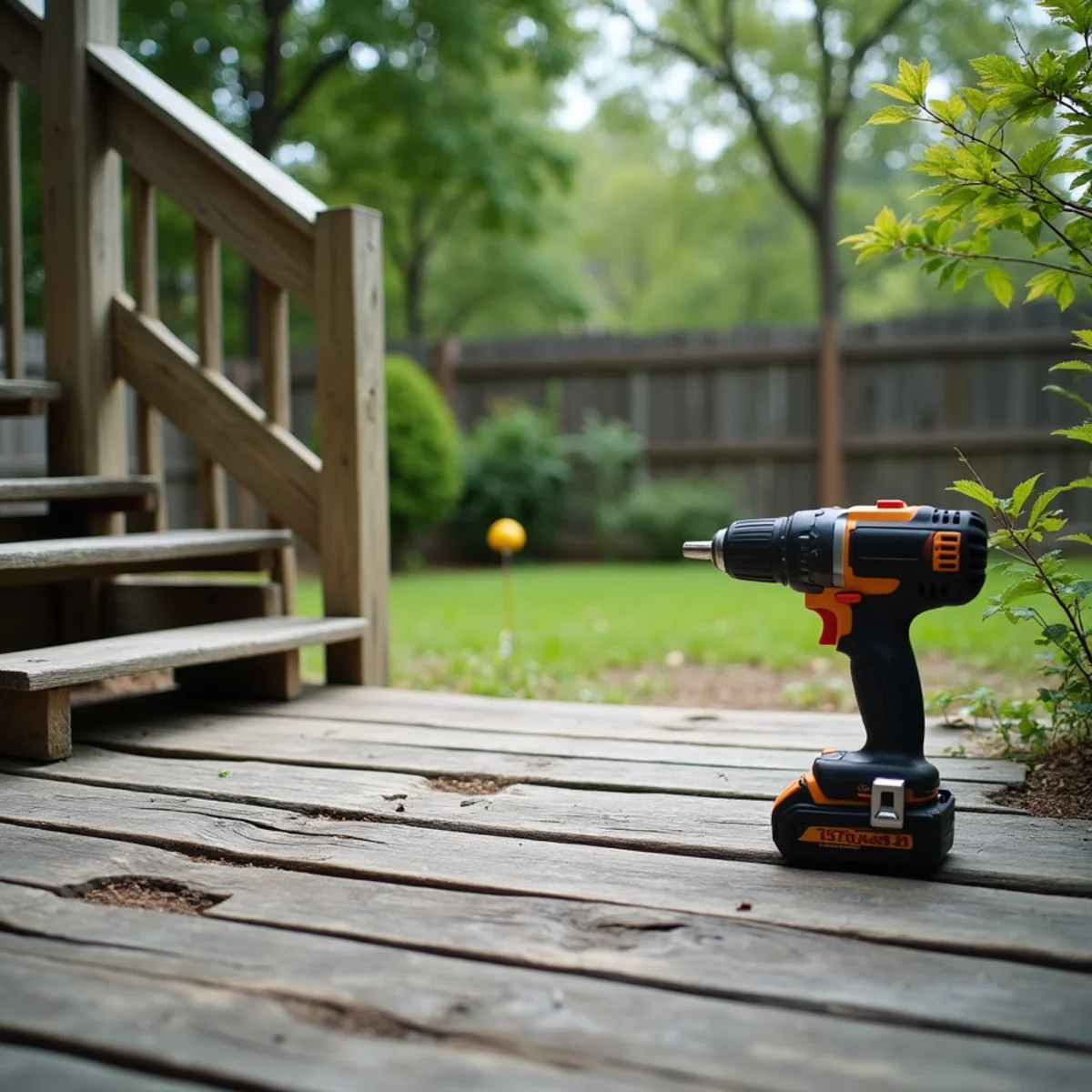
If the rot or damage on your deck is limited to boards, stairs, or railings and the framing underneath is solid, repair is usually the smart call. If the joists, posts, or the ledger board attaching the deck to your house are rotted or failing, you're looking at a replacement, because no amount of new boards fixes a structure that isn't sound. The way to tell is to check what's underneath, not just what you walk on.
A tired deck is one of the most common items on a Northwest Indiana to-do list. Boards go soft, stairs start to flex, a railing gets a little too much give, and the question becomes: fix what's failing, or tear it out and start over? Here's how to tell the difference, what you can safely check yourself, and when it's time to bring someone in.
Why decks wear out fast here
Region weather is hard on wood. Humid summers keep boards damp, especially in shade and anywhere leaves collect, and that moisture feeds rot. Freeze-thaw winters work water into every crack and fastener hole, swelling and shrinking the wood until nails pop and boards split. Posts and stair stringers that sit near the ground stay wet longest, so they usually fail first. A deck that's never been cleaned and resealed ages much faster than one that has.
Signs it can be repaired
- Soft or split boards in spots. If a few deck boards are rotted, cracked, or spongy but the rest are firm, those boards can be replaced.
- Wobbly stairs. Rotted treads or a flexing stringer on the steps are a common, fixable failure. It's often the first thing to go because stairs sit closest to the ground.
- Loose railings. A railing with too much give can usually be shored up or rebuilt. Fix it promptly, since a railing is a safety feature.
- Popped nails and loose boards. Freeze-thaw pushes fasteners up. Re-securing boards is routine maintenance.
- Gray, weathered surface. That's cosmetic. A wash and a fresh seal bring it back without any carpentry.
If the problems are on the surface and the frame underneath is solid and dry, repair gets you years more for far less than a new deck.
Signs it's time to replace
- Rotted joists or beams. If the framing that holds up the boards is soft or crumbling, new boards are going on top of a bad foundation.
- Rotted or shifting posts. Posts that are decayed at the base, leaning, or sinking mean the structure itself is compromised.
- Ledger board problems. The ledger is the board that attaches the deck to your house, and it's the most critical connection on the structure. Rot, water damage, or separation there is a serious safety issue.
- Bounce across the whole deck. A deck that flexes everywhere, not just in one spot, usually points to framing that's undersized or failing.
- Rot almost everywhere. When repairs would touch most of the deck, rebuilding is often the more honest use of money.
What you can safely check yourself
- The screwdriver test. Press a screwdriver into boards, stair treads, and the base of posts. Sound wood resists; rotted wood lets the tip sink in easily.
- Look underneath. With a flashlight, check the joists, beams, and posts for dark, soft, or crumbling wood, and look at where the deck meets the house for staining or gaps.
- Shake the railings and step on the stairs. Anything that moves noticeably needs attention.
Don't climb under a deck you suspect is unsafe, and don't load up a deck with a failing ledger or posts. If you find soft framing, posts, or ledger issues, have a professional assess it before anyone uses it.
How we handle it
Our handyman and property maintenance crew handles the repairs most decks actually need: rebuilding rotted or wobbly stairs, replacing damaged boards, and shoring up loose railings so they're safe again. If we find the framing or ledger is past saving, we'll tell you straight that the honest answer is a replacement rather than patching a structure that will keep failing. Once a deck is repaired, a pressure wash or soft wash brings the wood back to life. If you're tying rebuilt steps into a new patio, our hardscaping work picks up where the carpentry leaves off.
Ready to get your deck safe and solid again?
Whether your deck needs a few boards, a new set of stairs, or an honest opinion on whether it's worth saving, Rome and the crew will take a look. We handle deck and property repairs across Hobart, Portage, and Northwest Indiana. Reach out through our contact page for a free on-site estimate.
Frequently asked questions
How do I know if my deck is safe to use?
Check the structure, not just the surface. Wobbly railings, flexing stairs, soft or crumbling posts and joists, and any rot or separation where the deck attaches to the house are warning signs. If you find any of those, stay off the deck and have a professional assess it before it's used.
Can you replace just the bad deck boards?
Yes, as long as the framing underneath is sound. Replacing rotted or split boards, rebuilding failed stairs, and shoring up loose railings are routine repairs. If the joists, posts, or ledger underneath are rotted, new boards won't fix the real problem.
Why do deck stairs fail first?
Stairs sit closest to the ground, where moisture lingers longest, and they take concentrated foot traffic. In Northwest Indiana's humid summers and freeze-thaw winters, stair treads and stringers often rot or loosen before the main deck does, so they're the first thing to check.
Should I clean and seal my deck after repairs?
Yes. Cleaning removes the mildew and grime that hold moisture against the wood, and a fresh seal slows the water damage that causes rot in the first place. Regular cleaning and sealing is the cheapest way to keep a repaired deck from needing the same fix again.
Need help with handyman services?
The crew behind this guide handles handyman & property maintenance across Hobart and Northwest Indiana. Get a free, no-pressure on-site estimate.