The difference comes down to the surface: pressure washing uses high-pressure water for hard, durable things like concrete driveways and paver patios, while soft washing uses low pressure plus a cleaning solution for delicate surfaces like siding, older wood, and painted finishes. Use the wrong one and you etch concrete, gouge wood, or drive water behind siding — so the real skill is matching the method to what you're cleaning.
"Pressure washing" and "soft washing" get used interchangeably, but they're two different tools for two different jobs. Pick wrong and a cleaning job turns into a repair bill. Here's how they actually differ and which one your home's surfaces need — with the Northwest Indiana grime that makes both necessary in mind.
What pressure washing is for
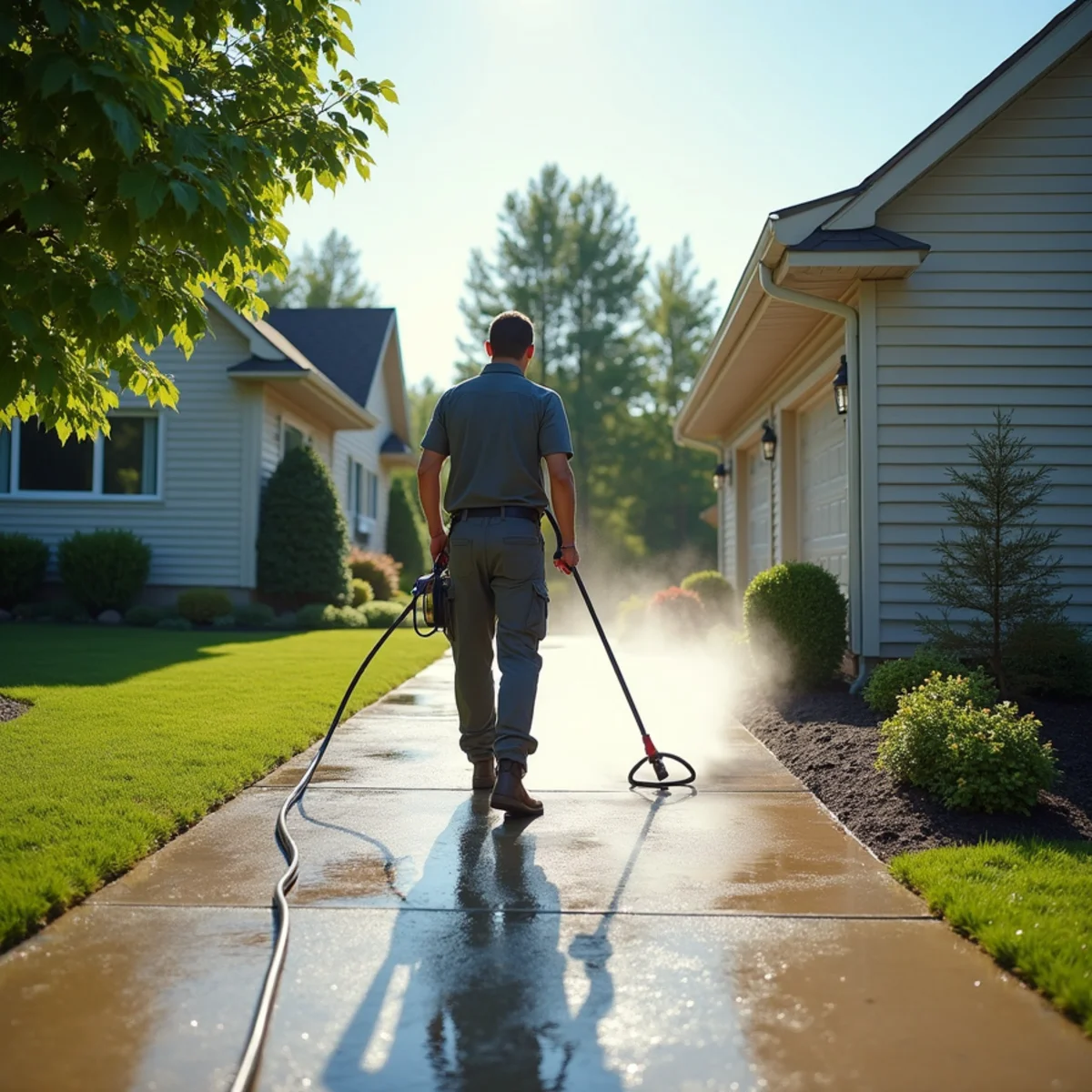
Pressure washing blasts dirt off with high-pressure water. On surfaces that can take it, nothing's faster or more satisfying:
- Concrete driveways and sidewalks — lifting tire marks, oil shadows, and ground-in grit.
- Paver patios and walkways — clearing the grime and growth packed into the joints.
- Retaining walls, steps, and masonry — knocking down algae and efflorescence.
The catch is that high pressure is unforgiving. Aimed at the wrong surface it etches concrete, blows the sand out of paver joints, splinters wood, and forces water where it shouldn't go.
What soft washing is for
Soft washing uses low pressure — closer to a strong garden hose — paired with a cleaning solution that kills algae, mold, and mildew at the root, then rinses clean. Because it cleans chemically instead of by force, it's the safe choice for anything delicate:
- Vinyl, aluminum, and fiber-cement siding — where high pressure can drive water behind the panels.
- Wood and composite decks — where a wand gouges soft grain.
- Painted and older surfaces — where pressure strips finish and damages the material.
The bonus: because soft washing kills the organisms rather than just blasting the surface film, the green and black growth stays gone longer than a pure pressure rinse.
Why it matters so much here
Northwest Indiana is hard on exteriors. Hot, humid summers feed algae and mildew — especially on shaded, north-facing walls and anything near trees — while freeze-thaw winters and road salt grind grit into concrete. That means most homes here need both methods: pressure for the hard flatwork, soft washing for the siding and wood. The mistake we're called to fix is a homeowner (or a cut-rate crew) using one high setting on everything — etched concrete, streaked siding, or paver joints blown empty. We pressure wash and soft wash based on reading each surface, so the grime comes off and the surface doesn't.
Which does your project need?
- Driveway, sidewalk, or patio looking gray and grimy? Pressure washing.
- Green or black film on the siding? Soft washing — almost always.
- Deck gone gray and mildewed? Soft washing, to clean without chewing up the wood.
- A fresh paver patio or hardscape job that needs a finish clean? Pressure washing, with joint sand topped off after.
- A whole-house refresh? Usually both, surface by surface.
The honest answer for most homes is a mix — which is exactly what we sort out on a walk-through before any water flies.
Ready to make your exterior look years younger?
Whether your home needs pressure washing, soft washing, or both, the key is matching the method to each surface. Rome and the crew read every surface before we start, across Hobart and Northwest Indiana, so it comes back clean without damage. Reach out through our contact page for a free pressure washing estimate.
Frequently asked questions
Is soft washing better than pressure washing?
Neither is "better" — they're for different surfaces. Pressure washing is right for hard, durable flatwork like concrete and pavers; soft washing is right for delicate surfaces like siding, older wood, and paint. The best results come from matching the method to each surface, which is what a careful crew does.
Can pressure washing damage my house?
Yes, if it's used on the wrong surface. High pressure can etch concrete, gouge wood, strip paint, blow sand out of paver joints, and force water behind siding where it causes hidden damage. That's exactly why delicate surfaces get soft washed instead — same clean, no damage.
How often should I wash my home's exterior?
For most Northwest Indiana homes, once a year keeps algae, mildew, and grime from building up — more often for heavily shaded, north-facing, or tree-surrounded surfaces that stay damp. Regular washing also protects the surface, since algae makes walks slick and mildew shortens the life of siding and wood.
Will the green and black growth come back?
A plain high-pressure rinse removes the surface film but leaves the roots, so it returns fairly quickly. Soft washing uses a solution that kills the algae and mildew at the root, so it stays clean noticeably longer — one reason siding is soft washed rather than just blasted.
Need help with pressure washing?
The crew behind this guide handles pressure washing across Hobart and Northwest Indiana. Get a free, no-pressure on-site estimate.