Standing water in a Hobart yard comes from slow-draining clay and poor grade, and the fix is to move water off the surface and out: regrade so it sheds away from the house, extend downspouts to daylight, then add a French drain, dry creek bed, or rain garden where needed.
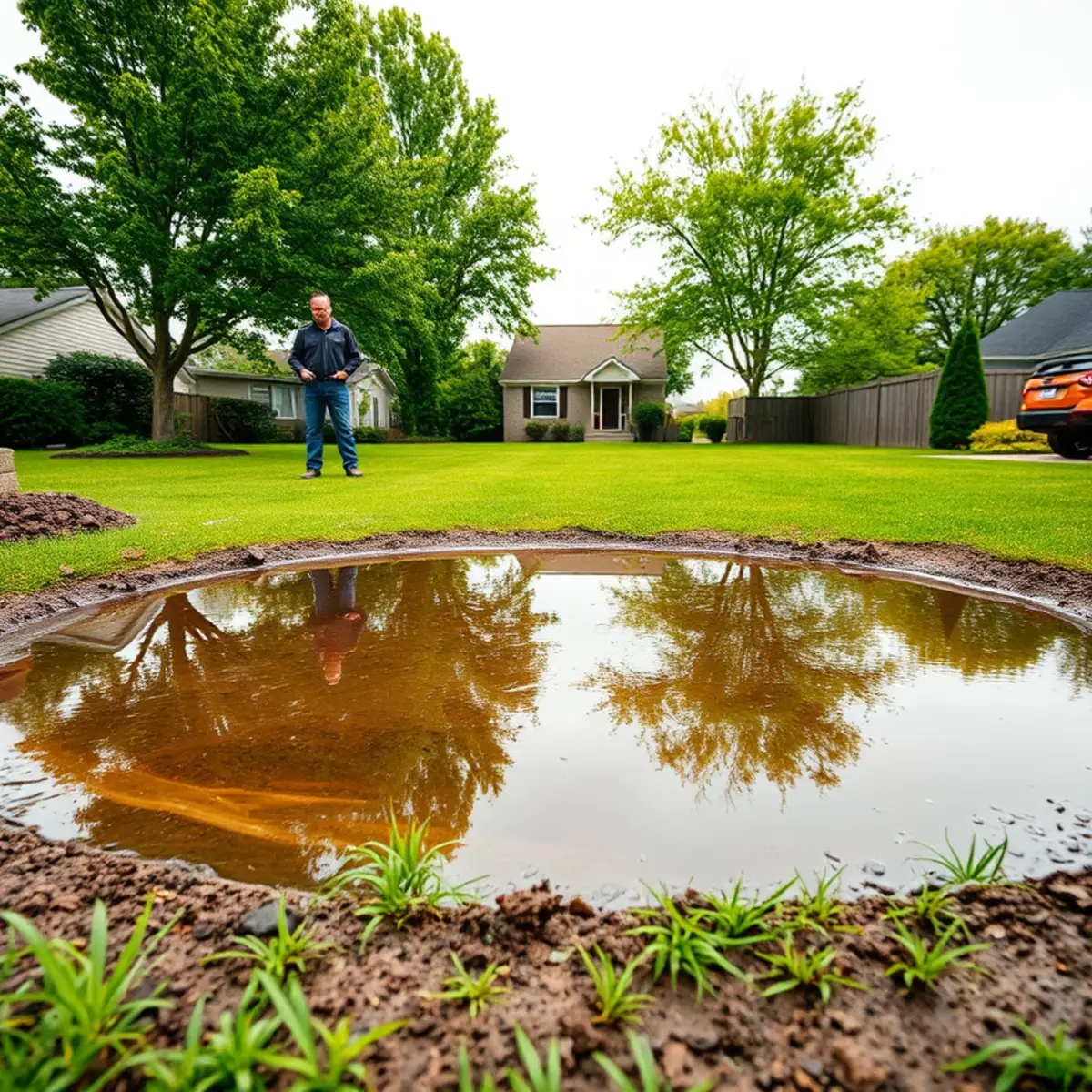
Three days after a good rain, half the backyard is still a pond. Sound familiar? It's one of the most common calls we get in Hobart, and it's almost never bad luck — it's the predictable result of our soil and our terrain working against you. The soggy spot won't fix itself, but once you understand why it's there, the right cure is usually straightforward.
Why Hobart yards flood
Two things conspire against local homeowners, and most yards deal with both.
The clay. Northwest Indiana sits on dense glacial clay that drains at a crawl. Sandy soil might soak up an inch of rain in an hour; our clay can take most of a day. Water that can't go down has to go somewhere, so it sits.
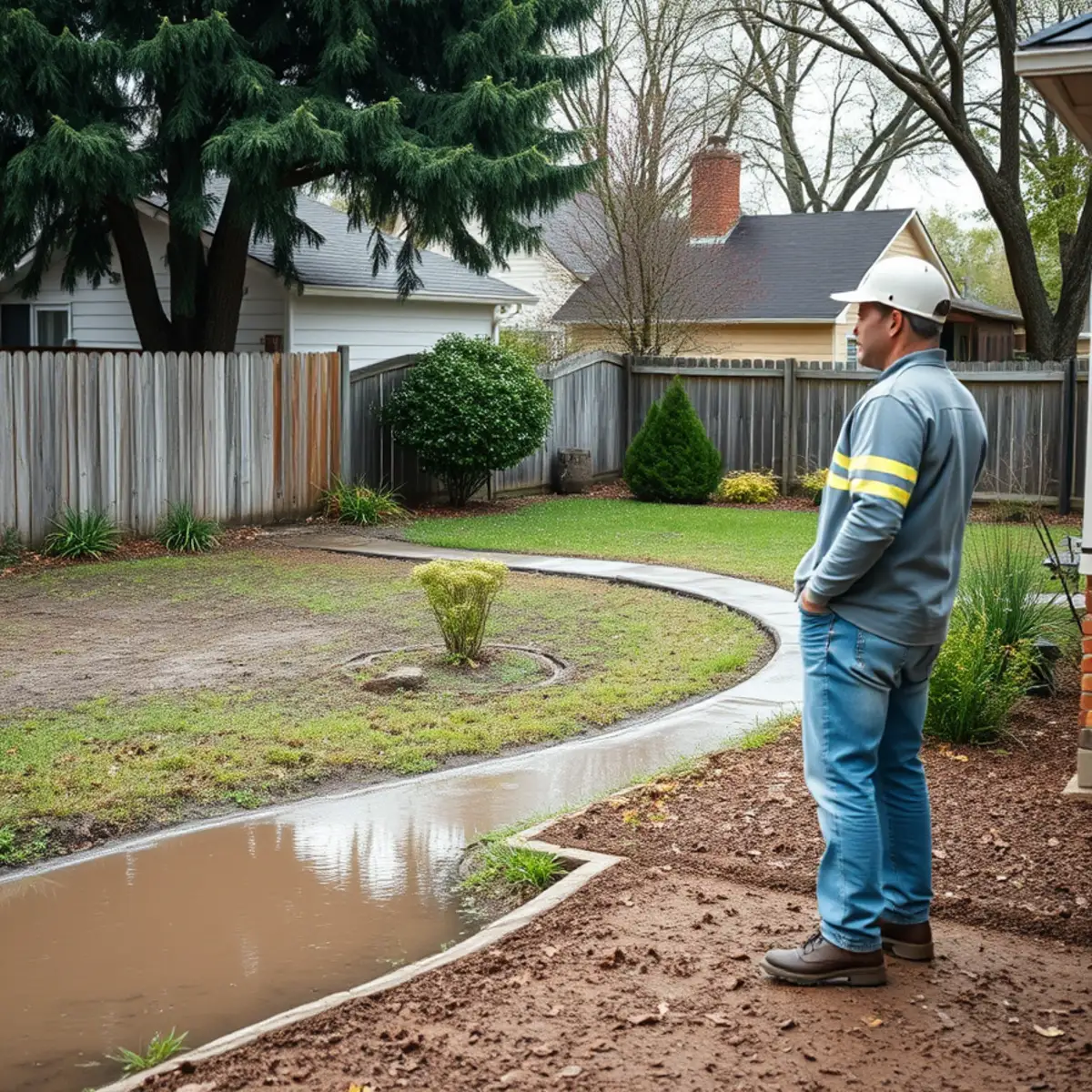
The grade. Much of The Region is flat, and a lot of subdivisions were graded to move water off the foundation and then... nowhere in particular. Add a builder who scraped the topsoil and compacted the subsoil with heavy equipment, and you get a lot that holds water like a shallow bowl. Downspouts dumping right at the wall and neighbors' runoff draining toward you finish the job.
None of that is your fault. All of it is fixable.
Diagnose before you dig
Guessing wastes money. Before recommending anything, we read the yard, and you can start the same way.
- Watch where water enters and pools. Grab a coffee during the next storm and note the path water takes and where it stalls. That map is worth more than any product.
- Check your downspouts. If they discharge within a few feet of the house, that concentrated water is often the whole problem.
- Find the low points. A long level or even a garden hose laid across the yard reveals which way the ground actually falls — it's rarely where you'd guess.
- Do a percolation test. Dig a hole about a foot deep, fill it with water, and see how long it takes to drain. If it's still holding hours later, you've confirmed slow clay.
- Note how long water lingers. A puddle gone in an hour is cosmetic. Water standing for days kills roots, breeds mosquitoes, and can threaten your foundation.
The fixes, from simplest to most involved
There's a whole toolbox here, and the right answer usually combines two or three. We match the fix to the cause instead of selling one product for every yard.
Re-grading and surface shaping
Often the first and best move. If the ground slopes the wrong way, we reshape it so water sheds away from the house and toward a safe outlet. Getting the grade right can solve a surprising number of "drainage" problems on its own, which is why it's the foundation of our drainage and grading solutions. Everything else works better once the surface flows correctly.
Downspout and sump extensions
The cheapest high-impact fix. We run buried, solid pipe from your downspouts and sump discharge well away from the house to daylight or a drainage point. Moving that roof and basement water — which is a huge volume — away from the trouble zone frequently shrinks the problem dramatically.
French drains
When water sits below the surface in saturated clay, a French drain gives it a path. We dig a trench, line it with fabric, set perforated pipe in clean gravel, and slope it to an outlet. It quietly collects groundwater and moves it off before it can pool. Done right, with the correct slope and a real outlet, a French drain is one of the most durable fixes there is.
Dry creek beds
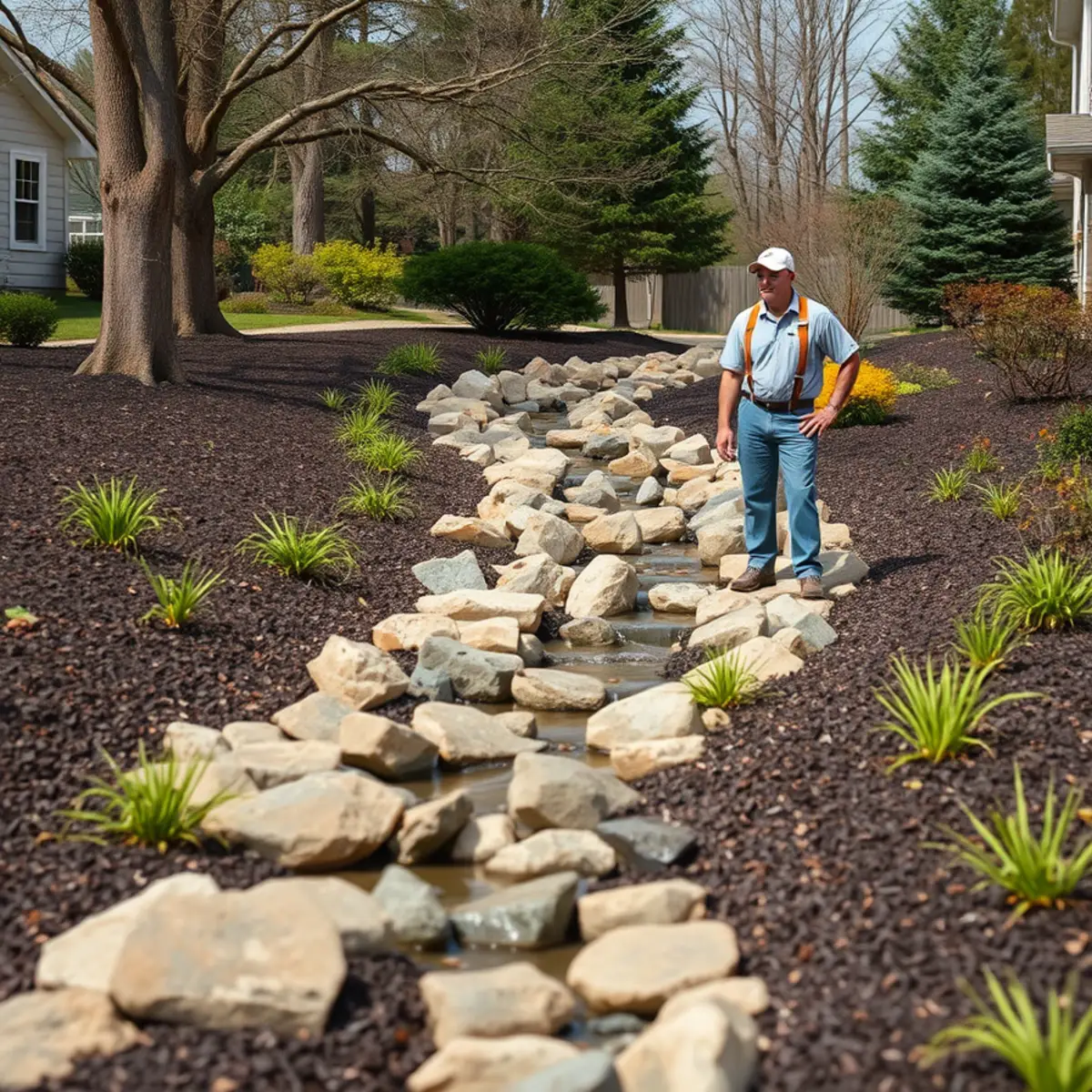
A dry creek bed handles surface water and looks good doing it. We carve a shallow, stone-lined channel that carries storm runoff along a planned route — think of it as a visible drainage swale dressed up with river rock and boulders. In a yard where a French drain would be overkill, a dry creek bed moves water and becomes a landscape feature.
Rain gardens
Instead of fighting the water, you put it to work. A rain garden is a shallow, planted basin set in a low spot, filled with deep-rooted natives like swamp milkweed and switchgrass that drink up runoff and let it soak in slowly. It's the most attractive fix on this list and a favorite for eco-minded homeowners over in Portage near the Dunes, where native plantings feel right at home.
Retaining walls and terracing
On a slope, water and soil both run downhill fast. A well-built retaining wall with proper drainage behind it holds the grade, creates level usable space, and controls where water goes. We build in gravel backfill and weep outlets so the wall drains instead of bulging — a wall that traps water is a wall that eventually fails.
Putting it together
Most real fixes stack. A typical Hobart job might extend the downspouts, re-grade the low quarter of the yard, and add a French drain to a chronically wet corner — then we replant the disturbed ground so it looks intentional, not like a construction site. That final step, folding the drainage work into a clean landscape design and installation, is what separates a repair from an improvement.
Ready to dry out your yard?
You shouldn't have to plan your life around the forecast or lose half the yard every time it rains. Rome and the crew know exactly how water behaves on Hobart's clay, and we'll trace your problem to its source before we lift a shovel. When you're tired of the swamp out back, reach out through our contact page for a free on-site estimate and a plan that actually drains.
Frequently asked questions
Can't I just fill in the low spot with dirt?
Almost never works. Dumping soil into a puddle usually shifts the water to a new low point or traps it against the fill. The water needs somewhere to go — a path or an outlet — not just something on top of it.
How do I know if I need a French drain or a dry creek bed?
Roughly: subsurface, saturated-ground water calls for a French drain; visible surface runoff suits a dry creek bed. Plenty of yards use both. We sort it out on-site by tracing where the water actually comes from.
Is standing water a threat to my foundation?
It can be. Water pooling near the house works into the soil against the foundation, and in our freeze-thaw winters that moisture expands and contracts against the wall. Getting water away from the foundation is always priority one.
Will fixing drainage tear up my whole yard?
We keep disruption to the work zone and restore what we disturb. Trenching leaves a narrow scar that settles and greens back in, and we reseed or replant so the finished result looks like landscaping, not surgery.
Need help with drainage & grading?
The crew behind this guide handles drainage & grading solutions across Hobart and Northwest Indiana. Get a free, no-pressure on-site estimate.