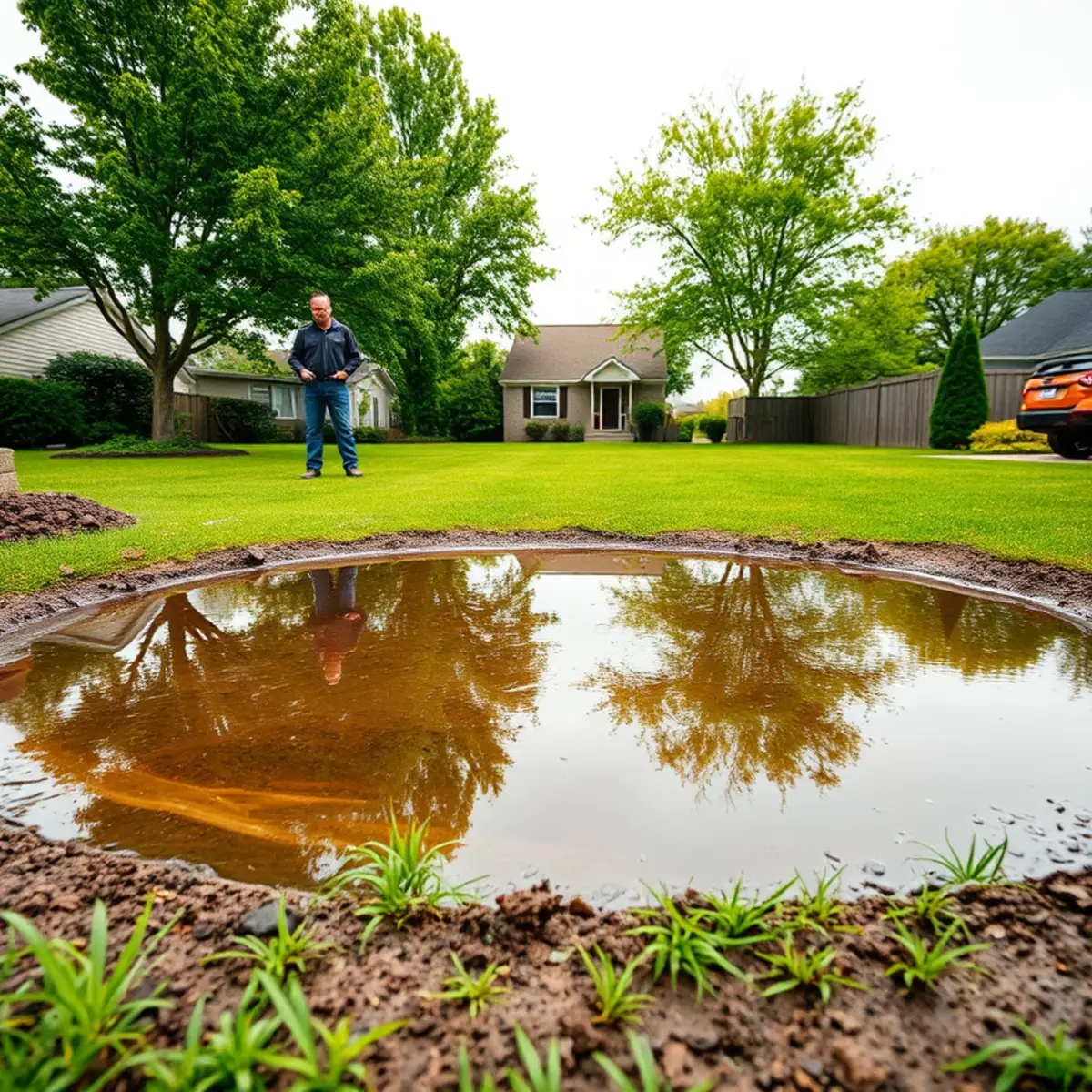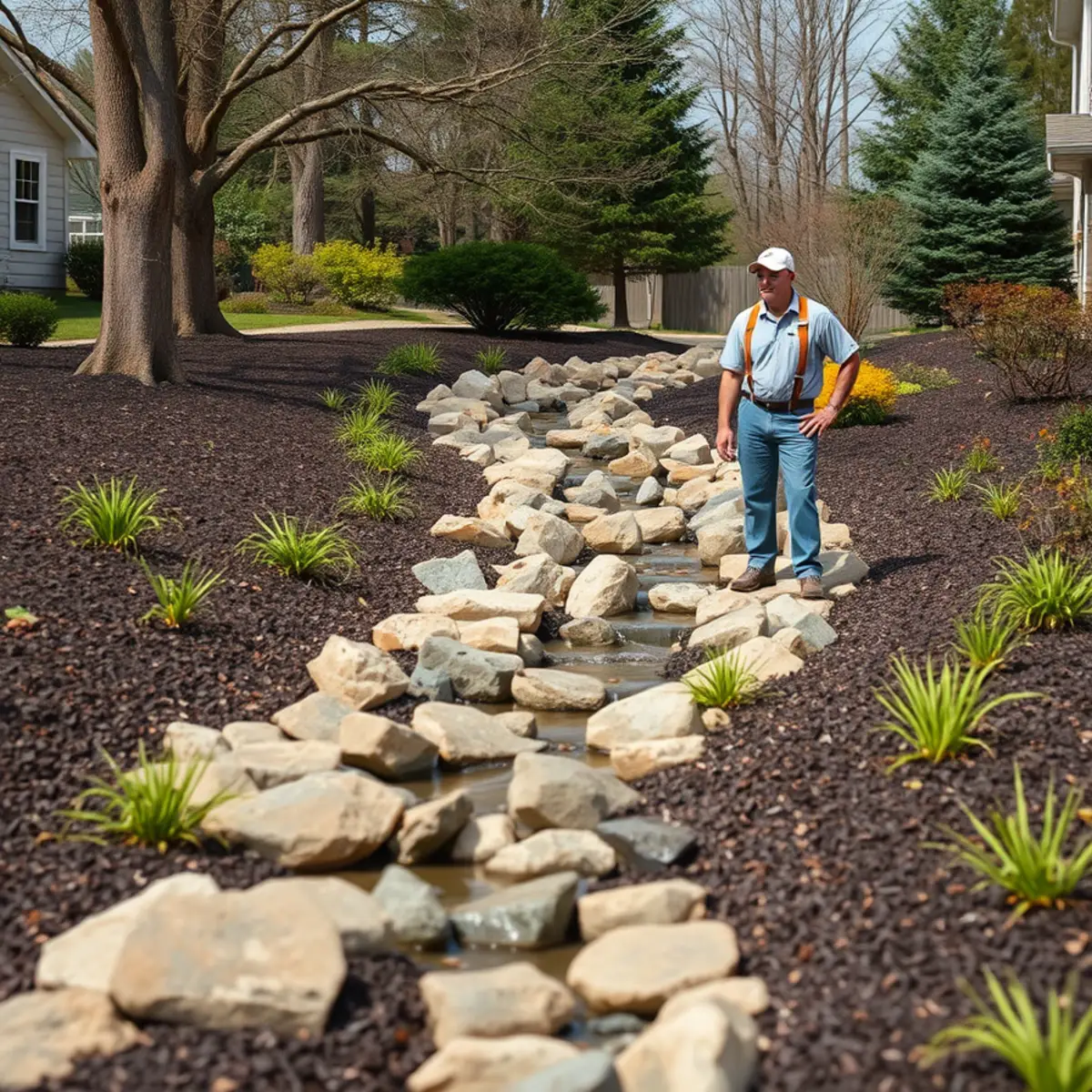
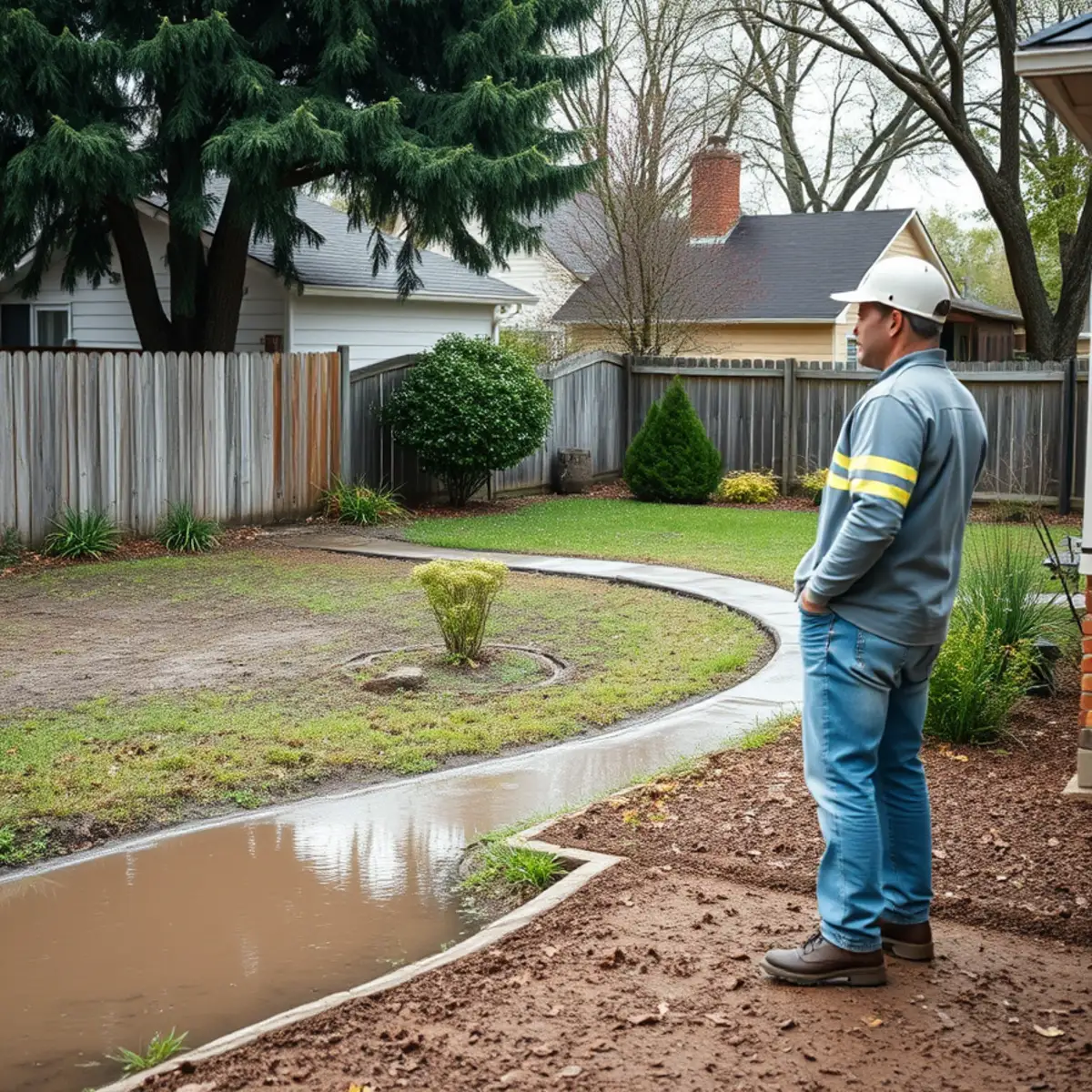
The clearest signs you need drainage help are standing water that lingers days after rain, dampness seeping toward your foundation, a spongy lawn that squishes underfoot, mulch washing out of beds, recurring winter ice sheets, summer mosquito zones, and shrubs dying in wet spots. On Northwest Indiana clay, these show up in the same places every storm.
Most drainage problems don't announce themselves. They creep. A yard that used to dry out after a storm starts staying soggy a day longer. A corner of the basement smells a little musty after a hard rain. Then one spring you're standing in ankle-deep mud where the kids used to play. Northwest Indiana's heavy clay soil is the culprit more often than not — it holds water like a bathtub instead of letting it soak away. Here are seven signs your property is telling you it needs real drainage help, not another bag of topsoil.
1. Standing water that lingers after the rain stops
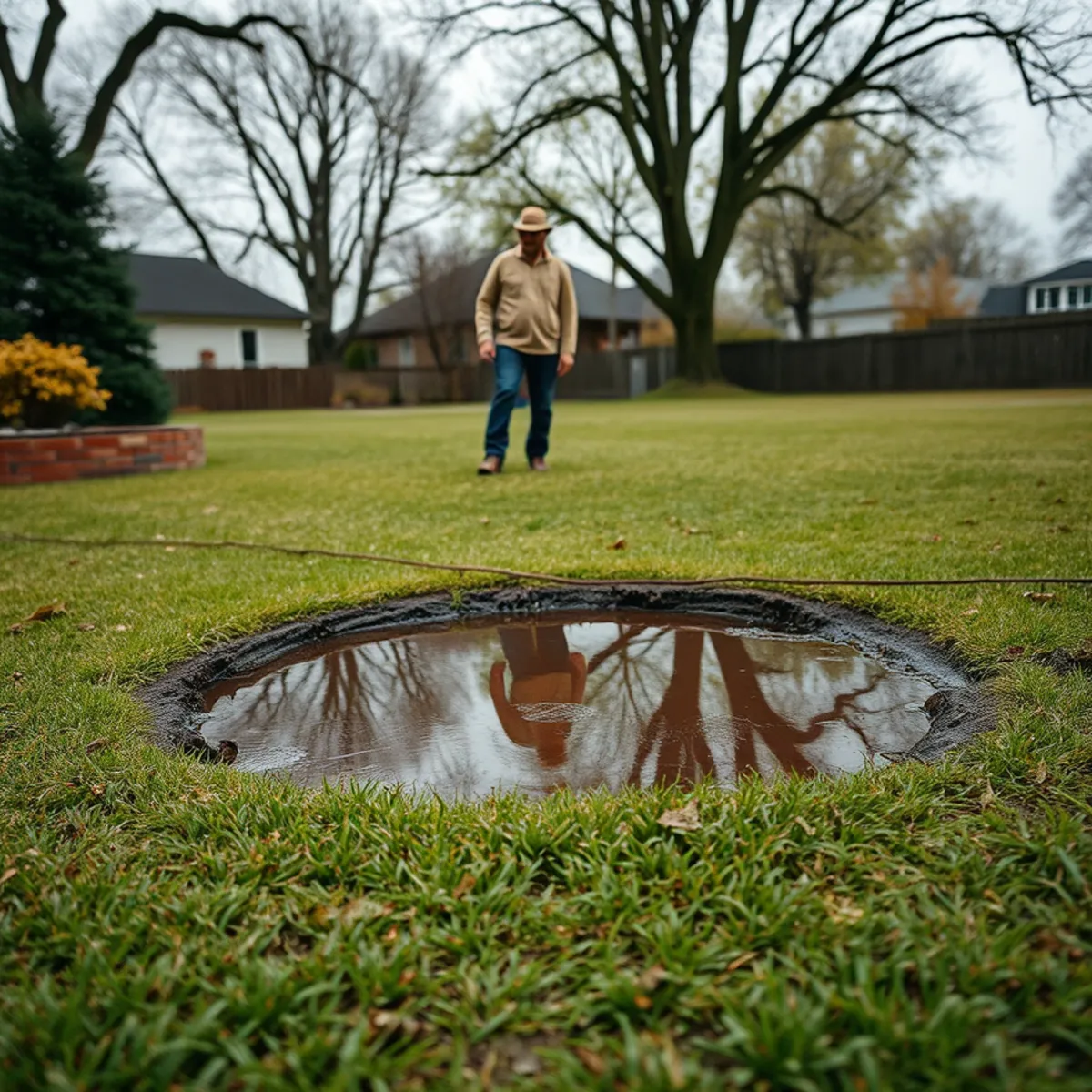
A puddle right after a downpour is normal. A puddle that's still there two or three days later is a drainage failure. On Region clay, water can't percolate down through compacted subsoil, so it sits on the surface and evaporates slowly. If the same low spots hold water storm after storm, the ground isn't going to fix itself — it needs a graded path to move that water somewhere useful.
2. Water or dampness seeping toward your foundation
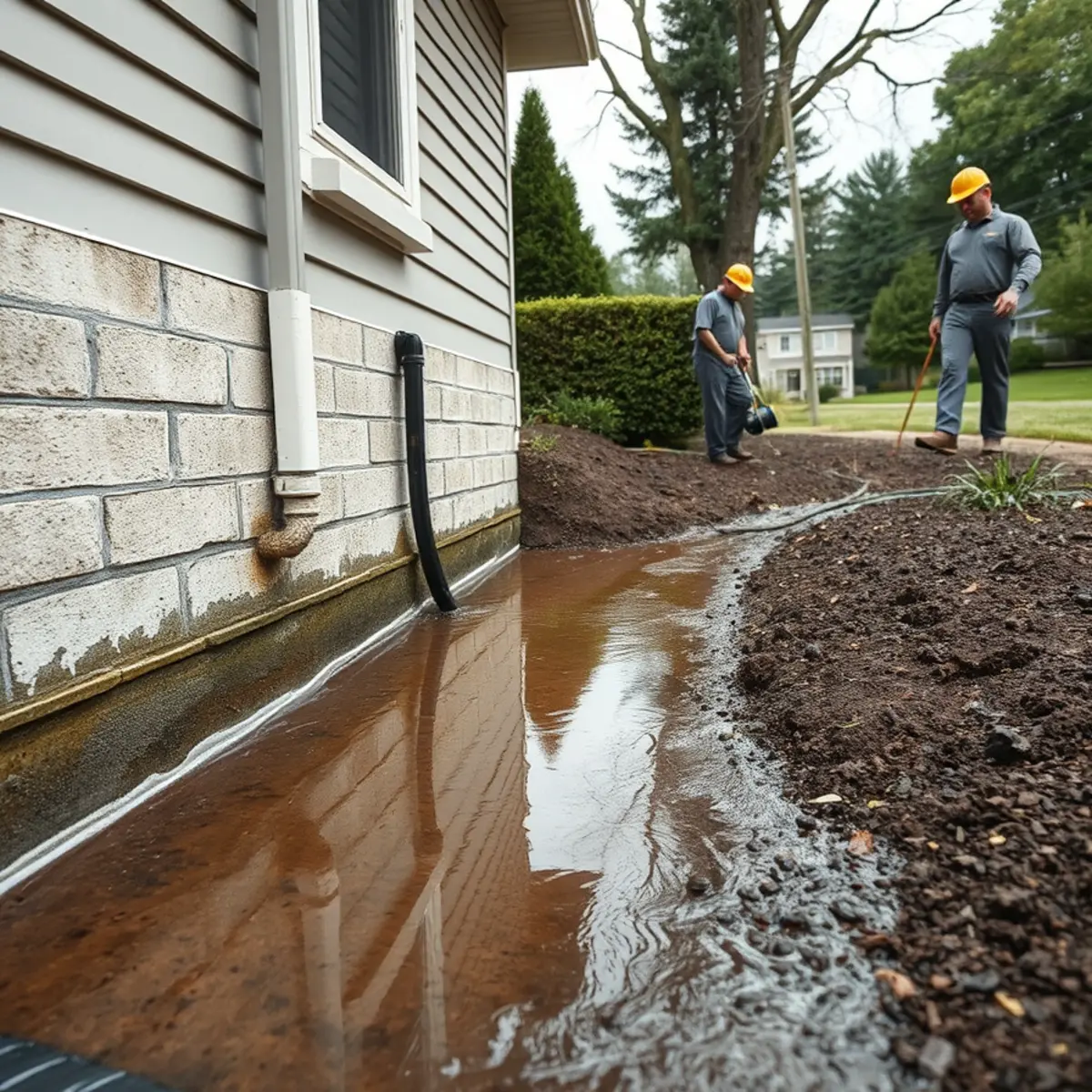
This is the sign that turns a landscaping nuisance into an expensive house problem. When the grade around your home slopes toward the walls instead of away, every rain drives water down against the foundation. You'll see it as damp basement corners, efflorescence (that white chalky residue) on block walls, or a sump pump that runs constantly. Getting positive slope away from the house and intercepting the water before it reaches the wall is exactly what our drainage and grading solutions are built to do.
3. A backyard mosquito zone every summer
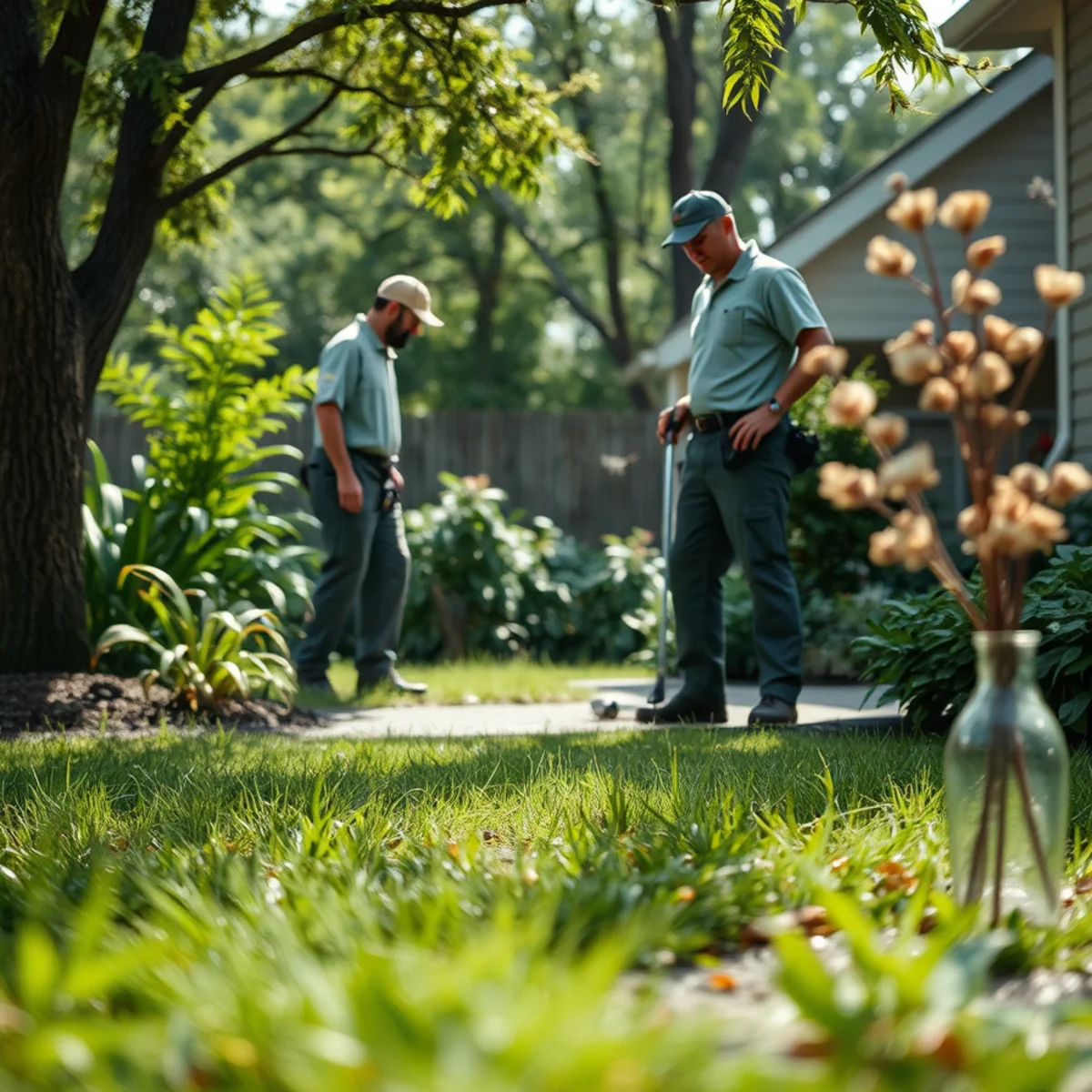
Mosquitoes don't need much — a low, wet, shaded spot that holds water for a few days is a full-blown nursery. If one part of your yard turns into a bug swarm every June while the rest is fine, that's standing water you probably can't even see anymore because grass has grown over the mud. Drying that area out with a French drain or a graded swale takes the breeding ground away.
4. Mulch that keeps washing out of your beds
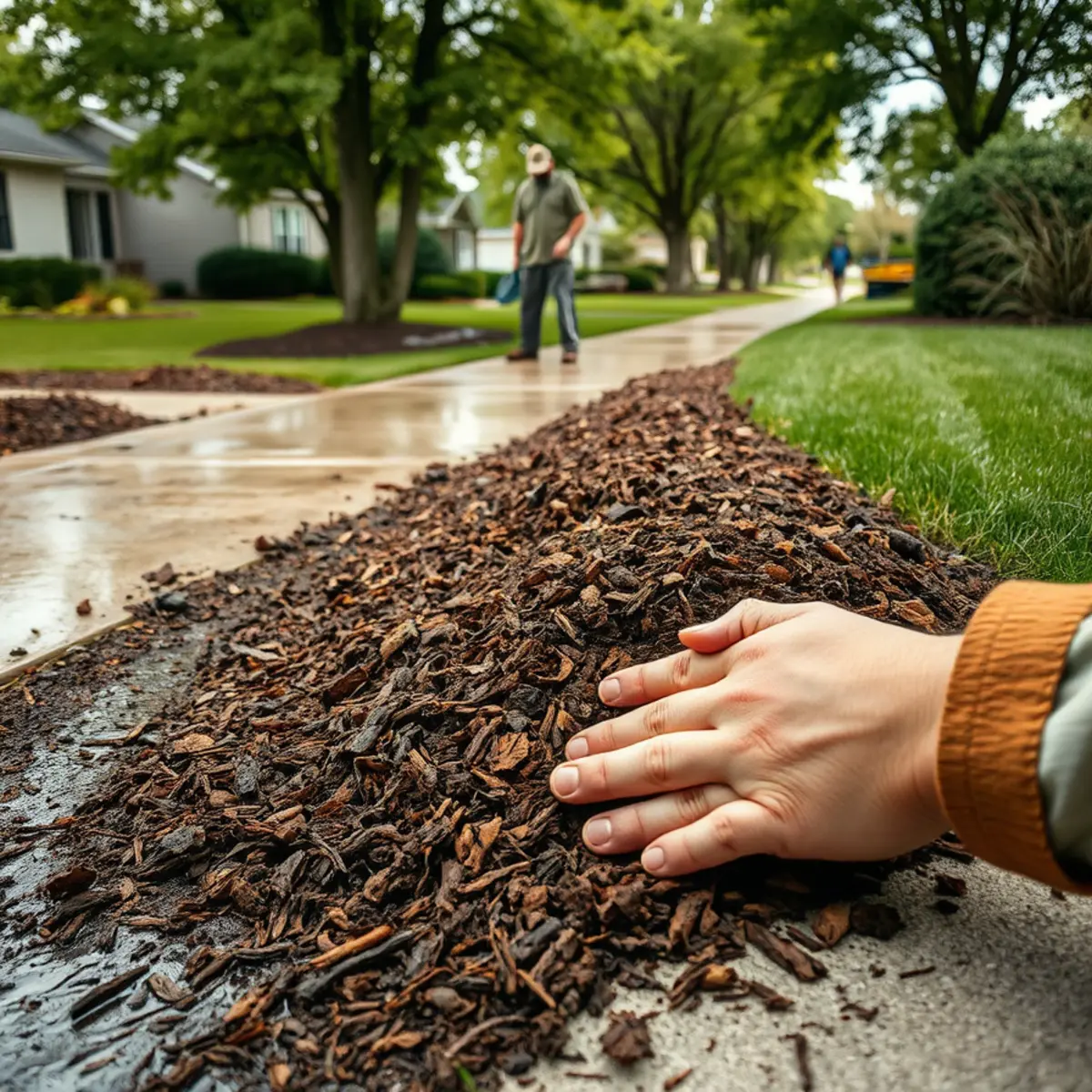
You spread fresh mulch in May, and by July it's fanned out across the sidewalk and the lawn. That's not bad mulch — that's moving water. When runoff sheets across your beds during storms, it carries the mulch, and eventually the soil, right along with it. Fixing the water flow keeps your beds where you put them. Where a slope is doing the eroding, a segmental retaining wall can terminate the runoff and turn a washout into a level, planted terrace.
5. Soggy, spongy lawn that squishes underfoot
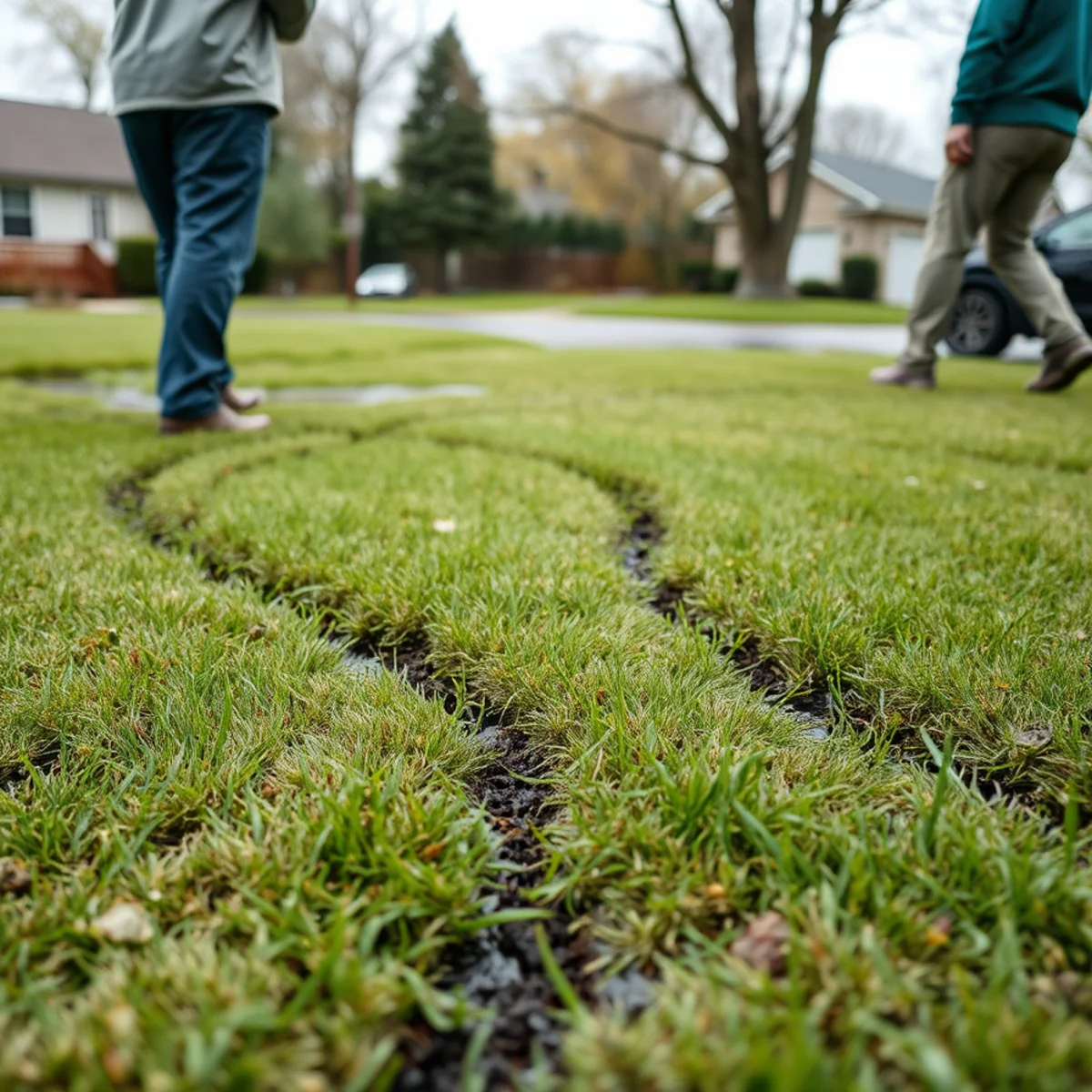
Walk your lawn a day after rain. If it squishes, if your shoes sink, if the mower leaves ruts, the root zone is waterlogged. Grass roots need air as much as water, and saturated clay drowns them. Chronically wet turf thins out, grows moss, and invites disease. You'll often see it as a stripe of weaker grass following the exact path water takes across the yard. That's your drainage map, drawn in dying grass.
6. Ice sheets on walks and driveways in winter
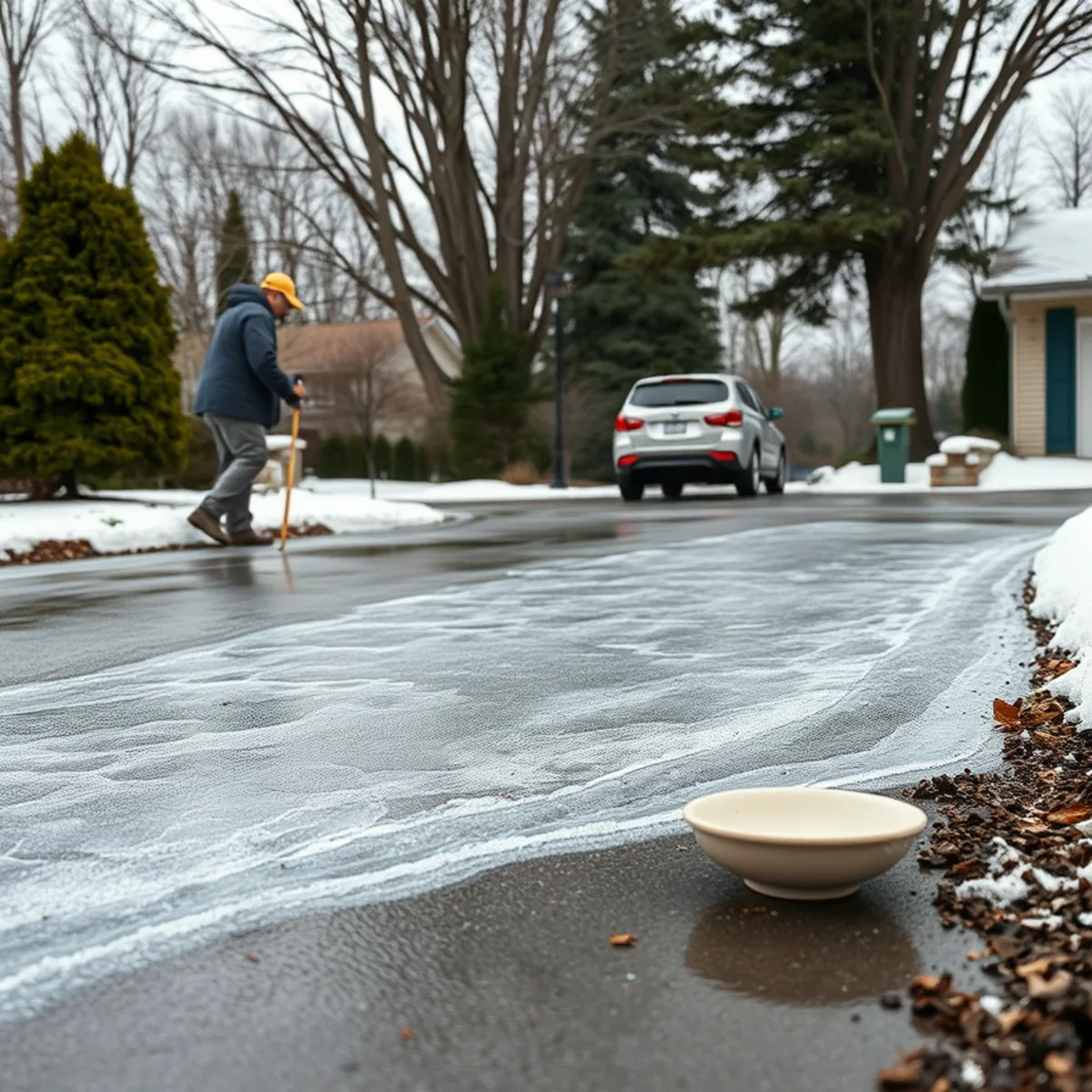
Drainage isn't only a warm-weather problem. Water that pools in the wrong place in November becomes a sheet of ice in January. If the same section of driveway, walkway, or patio glazes over every winter while everything else is dry, water is collecting there because it has nowhere to drain. In our freeze-thaw climate that standing water also works under slabs and pavers, then heaves them as it freezes. A recurring ice patch is a drainage flag and a slip hazard at once.
7. Plants and shrubs dying for no obvious reason
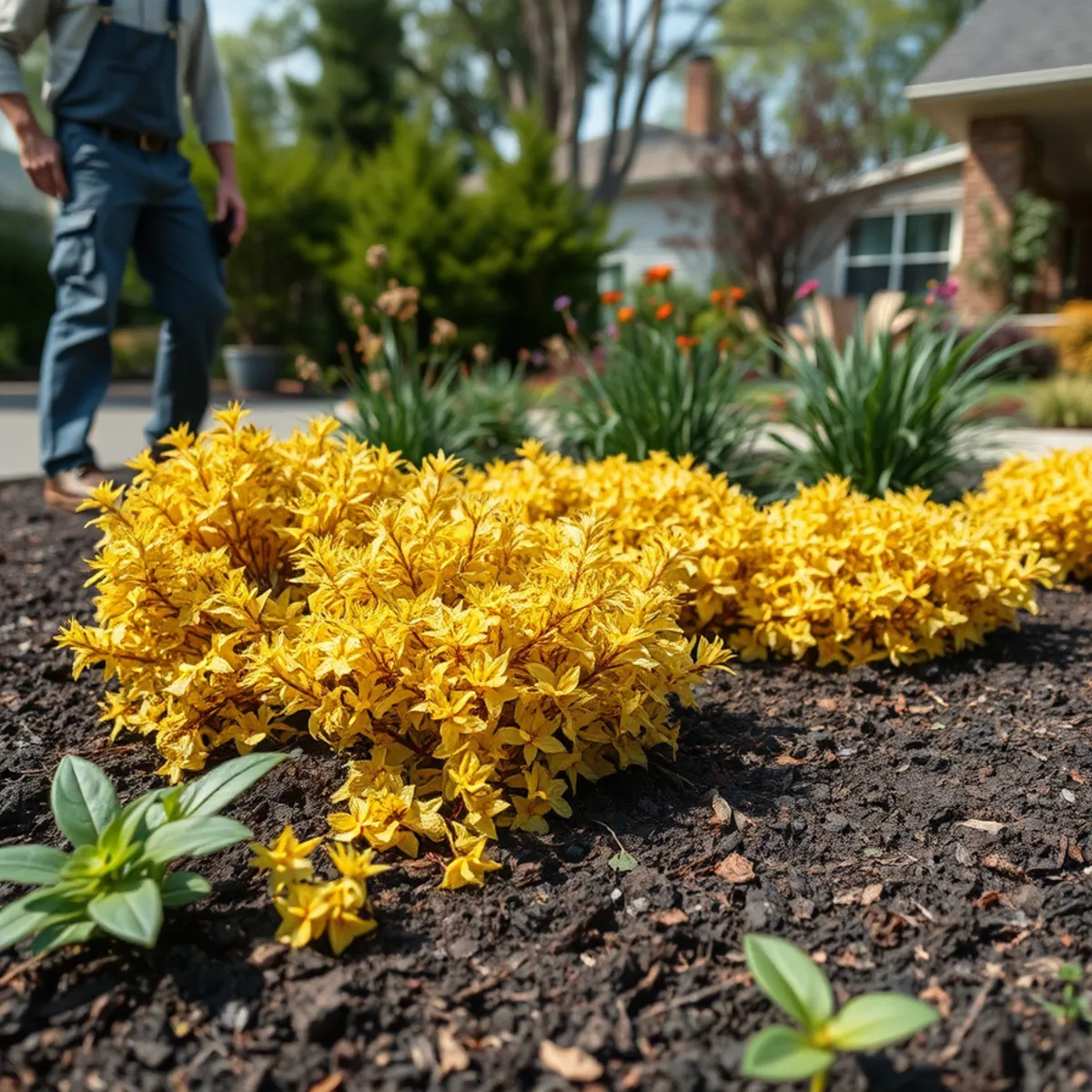
When a healthy shrub yellows, wilts, and dies while you're watering it faithfully, the problem is usually too much water, not too little. Roots sitting in saturated clay suffocate and rot. It fools a lot of homeowners into watering more, which makes it worse. If plants keep failing in one particular bed — especially a low one — the soil there is holding water long after the rest of the yard has drained. The fix is drainage and soil amendment, not another trip to the garden center.
What actually solves it
The right fix depends on where the water comes from and where it can go. On the properties we work across the Region, the answer is usually one of a few proven tools, or a combination:
- French drains — a gravel-and-pipe trench that collects subsurface water and carries it away from the trouble spot.
- Dry creek beds — a stone channel that moves surface water while looking like a landscape feature instead of a construction project.
- Regrading — reshaping the ground so water runs away from the house and off the low spots by design.
- Downspout extensions — getting roof water well away from the foundation instead of dumping it at the corner.
- Soil amendment — working compost into planting beds so the ground drains instead of packing tight.
Most of the time drainage isn't a standalone job — it's the foundation of a healthy landscape. When we plan a landscape design and installation project, water management comes first, because the prettiest beds in the world fail if they're sitting in a swamp. Rome and the crew have solved a lot of wet-yard headaches from our base in Hobart out to the tidy residential grids of Munster and across Lake County.
From the field
When we walk a wet yard, the first thing we do is ignore the puddle you're pointing at and look uphill. Standing water is almost never a problem where it sits — it's a problem with where it came from and where it can't go. We've dug more than one French drain right where a homeowner asked for it, only to find the real fix was a downspout dumping a couple hundred gallons a storm forty feet away.
Clay changes every rule of thumb. A French drain in sandy soil can bleed into the surrounding ground; in Region clay it can't, so it has to be built like a sealed pipe with a real outlet daylighting to a lower spot or a swale. We've been called to fix plenty of drains that dead-ended into clay and turned into underground bathtubs. If a drain has nowhere to go, it doesn't drain — it just fills.
The other tell we read is the grass itself. A stripe of thin, pale, moss-flecked turf almost always traces the exact path water takes across a lawn. Before we ever bring the laser level out, that dying stripe has usually already drawn us the map.
Ready to dry out your yard?
If you're nodding along to two or three of these signs, your property is already telling you what it needs. Let Rome's crew read the water on your lot and build a drainage plan that actually moves it — French drain, dry creek bed, regrade, or the right mix. Get in touch through our contact page for a free on-site estimate, and we'll walk the wet spots with you and give you a straight answer on the fix.
Frequently asked questions
How do I know if it's a drainage problem or just a wet week?
The tell is repetition. Everybody's yard gets wet during a heavy stretch. A drainage problem shows up in the same spots every single time it rains, and the water lingers for days after storms have passed everywhere else. If you can predict where the puddle will form before the clouds even open up, that's a drainage issue.
Will a French drain work in clay soil?
Yes, when it's built for clay. The trick in Region soil is a wide, deep gravel trench and a positive slope to a real outlet, because the clay around it won't absorb the water on its own. A drain that just dead-ends into more clay won't work — it has to carry the water somewhere it can actually leave.
Can drainage really damage my house?
It's the most common way. Water pooling against a foundation finds its way through cracks and porous block, and freeze-thaw pressure widens those paths over time. Redirecting water away from the walls is far cheaper than repairing a wet basement later.
Need help with drainage & grading?
The crew behind this guide handles drainage & grading solutions across Hobart and Northwest Indiana. Get a free, no-pressure on-site estimate.